Tag Archives: Hiroi Michiaki

第二次世界大戦中の廣井家

もともと東京にいた廣井家は、第二次世界大戦中に何十万人もの死者を出し都市を壊滅させた空襲によって多大な損失をこうむった。廣井家がどのように東京から逃れ東北で新しい生活を始めたのか、廣井先生が初めてアメリカ兵を見たときの第一印象、そして戦争に対する廣井先生の思いなどに耳を傾けてほしい。

テーマを明確にするためオリジナルのインタビューを少し編集したクリップとなります。このクリップを文字に起こしたファイルはこのページの下にあります。廣井のインタビュー全文はこちらにあります [ 準備中  ]。

===========================================

[00:07:28]

ポーラ・カーティス:     よろしければ、あのう少し戦時についてお話したいと思いますが、あのう、その時についてどのような思い出がありますでしょうか。

廣井道顕:      何・・・

ポーラ:              戦時の時。

廣井:    何の時?

ポーラ:    戦時の時。戦争。

廣井:    あぁ。戦争中。戦争の時ね。あんなことするもんじゃないやね。戦争はね。絶対反対だよね。うん。だって、みんな殺されたんだもん。同級生一人もいないんですよ。みんな死んじゃったの空襲で。で隣近所の人も全部、誰もいない。

ポーラ:              で、ご家族はその時・・・

廣井:    弟と母親が、未だに行方知れず。死んでると思うんですけど。あのう、届けに行ったら、確認したかったって言われたのね。確認できないんですよね。もう空襲でみんな焼けて、どれがどれだか、誰なんだか・・・。で確認はできないって言ったら死亡届けはダメだ、行方不明だって言われて・・・で今でも行方不明のまま。

ポーラ:              お住まいはどちらでしたか、その時。

廣井:    うんとね、正式に言うと、東京都、江東区、大島町。大島っていう所なんですけど、大島町三丁目、の四百十番地、これが本籍地です。

ポーラ:   で、どのような生活をされていましたか。

廣井:    同じ、今と同じ。

ポーラ:    と言えば・・・

廣井:   うん、親父がこう、まぁ、色々な物を作って。

ポーラ:   じゃ、その時は江戸独楽の、あのう―、

廣井:   うん。戦争中でしたから、そんなに余計は、あのう、贅沢だっていうことで、あのう売ることを禁じられてて。で、あの、なんかね、こういう、ラベルみたいなシートみたいなものをもらうんですよ。それを張ったんじゃないと、売れなかった。で割り当てられて、月に何枚って。だから、それ以上のものできない状態で、あとはあのう、軍需品っていうか、戦争で使う道具の一部分を作らされてた。

ポーラ:              へ・・・ 先生かご家族はなにか戦争に対して努力しましたか。

廣井:   努力どころかみんな、もう、そのころは何も言えなったしね。言うと、すぐにあの憲兵が来て捕まえに来られるし、悪い癖なんかやったら大変だったんだよ。でみんな、まぁ日本人全部そうだったんですけど。みんな「勝つんだ・勝つんだ」って言われて喜んで、いたんですけど。であのう一部の人は絶対日本なんか勝つは 勝てる訳がないなんていう人結構いて、そうするとみんな捕まっちゃうんですよね。だから皆何も言えなくて、心の中ではもう絶対戦争なんか嫌なのね。だって家族、働き手 みんなと、も、持ってかれちゃって、ほんで亡くなって、何の補償もないし。うち辺りも親兄弟、家財産、空襲でみんななくなっても、何の補償もない。一言の謝罪もない。天皇陛下に謝ってもらいたいのね。で、あの、靖国神社で、あのほら、日本の総理大臣がなぜお参りに行くか。ほんと不思議でしょうがない。すごい違和感を感じますね。あのう、韓国とか中国の人たちが怒る、以上に、腹が立つのね。

[00:11:56]

ポーラ:   で、あのう、戦後の直後、お住まいは、あ、お住まいの住民はアメリカやアメリカ人に対する感想がどの感じでしたか。アメリカとアメリカ人に対する。

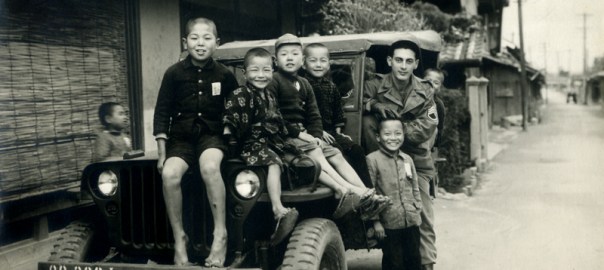
廣井:   ううん。最初ね初めて見たから。へへへ。アメリカの人ってね。であのう、日本が戦争負けたこと知らなかったんですよ。というのは、あのう、空襲で焼け出されてからこっち来て、あのう白石の山の奥、うーんと鎌先温泉ていう所がある、弥治郎こけしっていう、こけし村っての今ありますけど、その陰の山の中に、あのー、小屋があって、小さな山小屋があって、そこに、住んでて、電気も水道何も何もないとこだったんですけど。あのう・・・戦争に負けたっつうことを全然知らないでいて。うんで親父が白石の町に行ったらなんだか、町の様子が変だっていうことで、で聞いてみたら日本負けたんだって。であのう、そこで、山小屋では冬は越せないからって言うんで、下に降りて白石の町の中へ移ったんですけど、その時はじめてアメリカの兵隊さんを見て、あの、ジープ、ねぇ!乗ってきて「オホ―」とビックリして。へへへ。何だこれはと思って。

ポーラ:   態度が、あのう、どのような態度でしたか。その、あの例えばジープを運転しているアメリカ人に対して。

廣井:   いやぁ・・・どんなっていうよりね。びっくりして。たた、たまげてたね。で、この人たちと戦ってたんだぁと思うと、勝ってるわけないのになぁと思ったもんね。(笑)なんであんなめちゃくちゃなことやったのかなと思って。むしろ、当時の、偉い人たちの方に、腹が立ったもんね。偉い人なのに分かりそうもんなのに、なんでこんなむちゃくちゃな、訳の分かんないことして、日本人殺して。まぁ、うちだって、そうやって犠牲になったって、誰も、その、政府、の関係者の人、一言の謝罪もないし、何の補償もないし。むしろそっちの方に、腹が立ったのね。

ポーラ:   先生の感想は何でしたか。

廣井:   アメリカの人に?

ポーラ:   はい。

廣井:   いやあ、素晴らしいと思ったね。いや本っ当にあのう・・・きのうまで敵だった人が、あんなに優しい人たちだとは。それでなんで戦争しちゃったのか、理解できなかったし。それであのう、あの時は白石の、国道沿いの、農家の家 借りてて、そこでやっぱりろくろを回してたんですけど、アメリカの兵隊さんが、あのうパイプ、あのマドロスパイプって、あの、タバコを吸う。それを修理を、あのう頼まれて、よく親父直してたけどね。

[00:15:35]

ポーラ:   で、あのう戦後になって、あのう先生の生活がどのように変化されましたか。

廣井:   もうガラリと変わって、えらい目にあったね。今言ったように、ほら、なんの補償もないんで、裸一貫っていうか金も何もないし、こっち来たって知り合いがいる訳じゃないし、で言葉もこっちの方言が全然、分からなくて。で色々あって、地元の人たちとなかなか、こうなんつうの、仲良くなれなくて、でもいざ仲良くなったら地元の人たちはすごく親切でねぇ。それで助かったんですけども。とにかく、えらい苦労したっていうか。食べるものもないし、着るものもないし、冬は寒いし。よく死ななかったなぁと思ったね。ふふふふ・・・。

Postcard photograph of a soldier with Japanese children published Kinouya postcard archive, retrieved from Kinouya Postcard Collection.
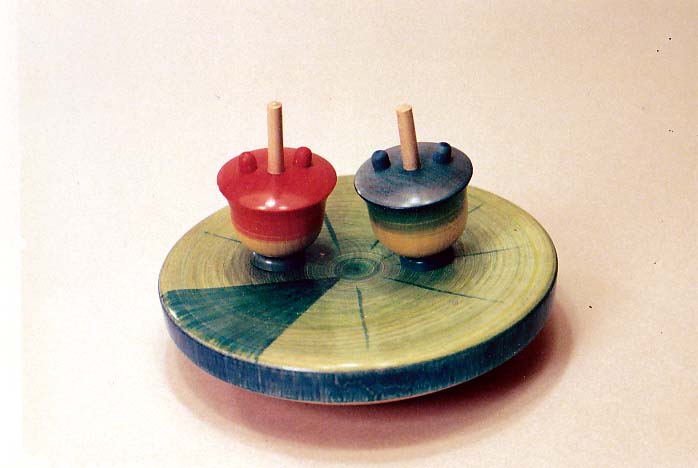
 

かえるの相撲 (frog sumō)

008
Click to enlarge.

Title:

かえるの相撲 (kaeru no sumō)
“frog sumo“

=====================

This set of tops forms two frogs on a lotus leaf engaging in a sumo match. Each of the frogs can be removed from the lotus leaf base to become individual tops. This playful theme is a popular one, which is even believed to have been represented in the famous 12-13th century Chōjū jinbutsu giga handscroll (seen below), which is thought to have one section that depicts anthropomorphic frogs and rabbits challenging each other to sumo.

***

***

Hiroi Michiaki: And… This is.. Ah. A frog. Frog sumo.

Mrs. Hiroi:   A frog sumo match.

HM:   The frog’s on a lotus leaf…              

MH: They’re lined up [on the shelves] in the shop.

HM:   On top of a leaf the frogs have a sumo match. Mm. They’re tops.  …There’s not really much to say. (laughs)

かえるの相撲

008
Click to enlarge.

タイトル:

かえるの相撲 (kaeru sumō)
“frog sumo“

=====================
ハスの葉の上で相撲を取っている二匹のカエルがセットになった独楽。カエルはそれぞれハスの葉の上から外して個々の独楽として回すことができる。遊び心にあふれた人気のあるモチーフであり、有名な12~13世紀の鳥獣人物戯画の巻物(下記参照)の中でも描かれたとされるモチーフである。鳥獣人物戯画の一部分では擬人化されたやカエルとウサギが描かれており、お互いに相撲で挑んでいる姿ではないかと考えられている。

***

***

廣井道顕: でぇ・・・これは。あっ、蛙が。蛙の相撲。

廣井夫人: うん。蛙の相撲取り。

廣井: 蛙があの、ハスの葉っぱ・・・

夫人:   店に並んでっけどね。

廣井:  葉っぱの上で相撲を取る。うーん、独楽ですね・・・特に謂れはないな。(へへへ。)

天狗の巣 (tengu nest)

Click to enlarge.
Click to enlarge.

Title:

天狗の巣 (tengu no su)
tengu nest”

=====================

This top depicts a tengu nest. Tengu are creatures from Japanese folklore that are considered a kind of kami (god/spirit) or yōkai (supernatural being). Although they are thought to take the form of birds, they are frequently depicted with both bird-like and human characteristics. Beginning around the fourteenth century, tengu began being depicted with a distinctive long nose. Tengu masks are often represented with bright red faces and extended, phallic noses. Tengu, sometimes appearing with yamabushi garb or Buddhist monks’ staffs, have had varying associations in legend with Shintō, mountain asceticism (shūgendō), and Buddhist customs. They are often depicted holding a magical fan made of feathers called a ha-uchiwa (羽団扇 “feather fan”).

***

***

Hiroi Michiaki:  Next… Ah. This is the tengu’s nest. I don’t think the tengu actually builds a nest, though, you know.

Mrs. Hiroi:  All of these are tengu hatching out of the nest.

Hiroi:  The tengu’s egg, there’s also an egg you see. Tengu, in legend—

Mrs. Hiroi:  The nose. The nose gets long like this.

Hiroi:  What would you call a tengu? A yōkai? They live in the mountains, though it’s not that they do anything particularly bad. They hold a fan like this and… sort of frighten people and such. And they, um, they’re born from eggs. And this is a tengu’s egg and here they’ve built a nest. So those are the tengu’s eggs. If you spin this, if you spin this to the side, it stands straight up. It doesn’t flip upside down, but if you spin it to the side, it straightens out. Although it’s an egg, it’s like the egg has a nose. If you spin that this stands on its side.

天狗の巣

Click to enlarge.
Click to enlarge.

タイトル:

天狗の巣 (tengu no su)
tengu nest”

=====================

天狗の巣をテーマにした作品。天狗は日本の伝承において神や妖怪の仲間として扱われる伝説上の生き物である。鳥の姿をしていると考えられているが、鳥のような姿や人間のような姿の両方で表現されることが頻繁にある。天狗は14世紀頃から、特徴的な長い鼻を伴って表現され始めた。天狗はよく朱色の顔に長く伸びた陽物的な鼻がついている仮面を付けた姿で描かれる。時に山伏の格好や仏僧の杖を持って登場する天狗は、神道の伝説、修験道や、仏教の風習などにおいて様々なつながりがあった。天狗は、羽で作られ不思議な力が備わっているという羽団扇(はうちわ)を持っている姿で、たびたび描かれる。

***

***

廣井道顕: あと・・・あぁ。これは天狗の巣だ。天狗がまさか巣をくってると思わないけどね。

廣井夫人:  全部これ、全部天狗にかえって。

廣井:  天狗の卵って、卵もあるんだもんね。天狗ってあのう、伝説の―、

夫人:  鼻。鼻こうやって高くなる。

廣井:  なんつったらいいんだ。妖怪なのかな。山に住んでいて、別に悪いことする訳ではないんですけど。こう団扇を持っていて、で何か・・・人を驚かしたり何かするんだよね。それがね、あのう、卵から生まれるんだって。で、これが天狗の卵でこれ巣をくってる。だからその天狗の卵で。これ回すとやっぱりあの、こう横に回すと、ピっとこう、真っ直ぐに立ち上がる。逆立ちまではしないんですけど横に回すとこう真っ直ぐになる。この天狗の、卵のくせに鼻があるんだよね。その鼻をこう回すと、こうピって横に立ち上がる。

The Early History of the Hiroi Family

On May 19th, 2014, we sat down with Hiroi Michiaki in Akiu, Miyagi prefecture, Japan, to begin our oral history interview. We began with Hiroi’s early life as a child in Tokyo. In this audio clip Hiroi describes his childhood days, family members, and the historical origins of the Hiroi family.

This clip has been slightly edited from the original interview for clarity. A transcript of this clip can be found below. And a full transcript of our interview with Hiroi can be found here [forthcoming].

===========================================

Paula Curtis: Sensei, when and where were you born? Where are you from?

Hiroi Michiaki:  Tokyo.

PC:     Which part of Tokyo?

HM:    Ah. In Tokyo, um, today it’s a place called Kōtō.

PC:     Could you talk a little bit about your life as a child and your family?

HM:    Mm when I was a child. It was fun, when I was a child. Ha ha ha.

PC:     Why is that?

HM:     It was that I had a lot of friends, and there were a lot of places to play in my neighborhood. Because it was Tokyo’s shitamachi. *

[Tokyo’s shitamachi was known in the Edo period (1600-1868) as an area in which commoners lived, full of business districts, known for a kind of “downtown” atmosphere, and which was in popular imagination the originating place of “true” Edo culture.]

[00:01:20]

PC:      Could you explain a bit about your family’s history?

HM:   Ah, family. The Hiroi family?

PC:     Yes.

HM:    The family of the Hiroi… Family… Well, if it’s family, I have parents and siblings, but… [do you mean] the history of the Hiroi?

PC:     Yes.

HM:     Or…

PC:      Well, is okay [to talk about] both?

HM:     Well, my family was my father, my mother, and also I had two brothers and a younger sister. My mother and my sister,* in the war, they went missing in air raids. Even today their whereabouts are unknown. Right now my younger brother is in Yokohama, and my sister went to Osaka to get married, but she died, died of illness. Now, my younger brother is running around the world… In America… he’s an honorary citizen of Seattle, and it seems he has his own corners in museums in France and Germany. And also in Finland… it seems my younger brother has made it in museums and art museums. But I haven’t gone so I don’t know.

[* Here Hiroi mistakenly says ‘sister,’ and later corrects himself to say “younger brother” in another part of the interview.]

[00:02:58]

PC:      And the Hiroi family [line]?

HM:    The Hiroi family, it was something. Edo… err… it was the Sengoku period. Tokugawa Ieyasu’s Battle of Sekigahara… Tokugawa Ieyasu won, and when he moved to Edo, on the way from Sekigahara returning to Edo, the descendants of the Hiroi family… Mmm. I’ve forgotten where the place was, but in the old days there was a family called “Watanabe,” and they lived in a village called “Hiroi,” and there they were doctors. And Tokugawa Ieyasu won and returned to his castle, or I should say he was returning to Edo and on the way [Hiroi] made his acquaintance. I don’t know why he made his acquaintance, but [the Hiroi descendant] was invited to come with him to Edo, and it’s said that because he was from that Hiroi village he was called Hiroi and not Watanabe. And he was employed by Tokugawa Ieyasu’s grandson… was it Iemitsu? And for generations he was, what should I call him, the private doctor of the bakufu, in the private residence, he held the highest rank of a doctor. That’s the story. There’s a book published, but, shall I show you the book?

PC:     Ahh, that’s right. Is it alright to look at it later?

HM:   Yeah.

PC:     Okay. Thank you very much.

HM:    Umm records… there’s a book of them. It’s the Kan’ei or Kansei period… a reference book. In there [the history] of my family is written. Yeah.

[00:05:03]

PC:     Well then, about your family now—are you married? Do you have children?

HM:    I’m married, but for some reason we couldn’t have children. Mm.

PC:     And your time as a child. What school did you go to? Could you [talk a bit] about your academic background…

HM:      School, hm… We were dragged into the war, so I didn’t go properly.

PC:     Where was it?

HM:     Umm. The last [school I went to was] Ooshima daini elementary school, wasn’t it. Before that… in Yonezawa there were mass evacuations and school evacuations, so I was in Yonezawa for half a year. I think it was half a year. And I returned to Tokyo and at that time when I returned immediately there were air raids, and families were scattered, and people across the country and walked about from place to place, and I couldn’t go to school properly. Mm.

PC:     Well, when you were in school, did you have a course or subject you were particularly interested in?

HM:    Ahh, I hated studying. Ha ha ha. I only liked gym.

PC:      Well, work, about work, before you became an Edo-style top artisan, what kind of work had you done?

HM:    Ahh… come to think of it, I did a lot of different kinds, but not for long. What did I do? I did many things. That is, rather than “doing” them, it’s better to say I helped. I worked but I didn’t receive any money.

PC:     Was there, umm, a work that you particularly liked to do? You did a lot, but was there one you really liked?

HM:    Ahh, in the end the work my family was doing was the best. I didn’t really have another that I liked. Mm.

Photograph of Monzen-nakacho, in 1935 from the”Archives for the Tokyo downtown area 100 years” published by Life Information Center and is under public domain license, retrieved from Wikimedia Commons.


廣井家の歴史について

2014年5月19日 日本の宮城県秋保にある廣井道顕氏の自宅にて、口述歴史インタビューを行った。まず廣井氏が東京で過ごした幼少期について聞き取りを始めた。この音声クリップでは廣井氏が自身の子どもの頃の話、家族のこと、そして廣井家の家系的歴史について述べている。

テーマを明確にするためオリジナルのインタビューを少し編集したクリップとなります。このクリップを文字に起こしたファイルはこのページの下にあります。廣井のインタビュー全文はこちらにあります [ 準備中  ]。

===========================================

ポーラ・カーティス:         先生はいつ、どちらで生まれましたか。ご出身はどちらですか。

廣井道顕:      東京。

ポーラ:          東京の・・・

廣井:  うん、東京のね。えと今、江東区っていう所ね。

ポーラ:          あのう、子供の時の生活とご家族について少し、あのう、お話してくださいませんか。

廣井:  子供の頃ねぇ。楽しかったね、子供の頃。へへへ。

ポーラ:          なぜでしたか。

廣井:  やっぱ友達もいっぱいいたし、近所に遊ぶ所もいっぱいあったしね。東京の下町だから。あー、近所の人もみんな、なん、なんって言ったらのかな、親しいっていうか・・・可愛がってもらったって言ったほうがいいのかな。

[00:01:20]

ポーラ:          ご家族の歴史について少し説明してくださいませんか。

廣井:  あぁ、家族。うちの廣井家の?

ポーラ:          えぇ。

廣井:  廣井家の家族・・・家族・・・。ま、家族だったら、両親と兄弟なんですけど、廣井家についての歴史、ですか。

ポーラ:          はい。

廣井:  それとも・・・

ポーラ:          ま、どちらもよろしいですか。

廣井:  まぁ、家族は、父親と母親と、あと弟が二人と妹*が一人いたんですけど。母親と妹一人が、戦争で、空襲で、行方不明。今でも行方知れずなんですけども。今現在は弟が横浜に、妹が大阪に嫁に行ったんですけど、これが亡くなって。病気で亡くなったんですけど、弟の方はもう、今世界中駆けずり回って、アメリカ・・・シアトルの名誉市民になっているし、あと、フランス、ドイツの博物館に自分のコーナーもあるみたいだし。あとフィンランドだかで、弟のやっぱ博物館だか美術館ができているんだそうですけど。ただ行ったことがないから分からないけどね。

* [ ここでは誤って『妹』と言っているが、インタビューの別の部分で『弟』であった、と訂正している。]

[00:02:58]

ポーラ:          そして廣井家は?

廣井:  廣井家はね、大変なんですよ。江戸・・・えーとね、戦国時代だ。徳川家康の関ヶ原って、あのう徳川家康が勝って江戸に移った時に、途中関ヶ原から江戸へ戻る途中で、あのう、廣井家の先祖が、うーんと、あそこはどこだか場所ちょっと忘れてるんですけど、昔はあのう渡邊っていう姓だったんだそうですけど、廣井村っていう所に住んで、そこで医者をやてたんです。で、徳川家康が勝って江戸に入城というか、こう勝って江戸に戻る時  途中で知り合って、どういうわけで知り合ったかは分からないけれども、で江戸に一緒に来ないかって誘われて、それであの、廣井村だから渡邊じゃなくて廣井って名乗れって言われて。で、徳川家康の孫の・・・家光かな、に仕えて代々あの幕府の奥医者って言うか、奥医法眼って、最高の医者の位を持ってた。っていう話で、それはあの本にも載っているんですけど、その本見せますか。

ポーラ:          あぁそうです。後で見てもよろしいですか。

廣井:  うん。

ポーラ:          はい。本当にありがとうございます。

廣井:  あのう記録・・・の本があるんですよ。寛永だか寛政・・・何とか図鑑っつうんだな。それにうちのこと載ってるんですけど。ええ。

[00:05:03]

ポーラ:          では、今の、あのう、ご家族なんですが、ご結婚されていますか。お子さんはいらっしゃいますか。

廣井: 結婚はしたんだけど、なぜか子供ができなくて、ええ。

ポーラ:      で、あのう、子供の時なんですが、どちらの学校を卒業しましたか。学歴について少し―、

廣井:              学校ねぇ。あのう戦争に巻き込まれちゃったから、ろくに行っていないんだよね。

ポーラ:          どこでしたか。

廣井:  うんとね。大島第二小学校っていうのが最後だったな。その前あのう、米沢に集団疎開って学童疎開ってのでやった米沢に半年ぐらい、半年くらいいたかな。また東京に帰ってきてから今度、戻るとすぐに空襲で、で家族散り散りになっちゃって、全国あちこち転々と歩いたらから、ろくに学校は行ってなかったですね。ええ。

[00:06:12]

ポーラ:          ま、学校の時は、特に何か教科や科目に興味がありましたか。

廣井:  あぁ、勉強きらいでね。へへへ。体育だけが大好きだったの。

ポーラ:          あのう、仕事、お仕事なんですが、江戸独楽の職人になる前、どのような仕事をすることがありましたか。

廣井:  あぁ・・・。そう言えば、色々なことをやりましたけど、長続きはしなかったですね。何やった?色々なことやったの。やったというか、手伝ったって言ったほうがいいのかな。働きに行ってお金をもらったことはなかったですね。

ポーラ:          ま、特に好きな、あのう仕事はありましたか。その色々しましたが、特に好きなのはありましたか。

廣井:  いやぁ、結局うちの今やっている仕事が一番よくて。他はあんまり好きなのはなかったですね。えぇ。

Photograph of Monzen-nakacho, in 1935 from the”Archives for the Tokyo downtown area 100 years” published by Life Information Center and is under public domain license, retrieved from Wikimedia Commons.


お化けのトビ出し (obake springing out)

Click to enlarge.
Click to enlarge.

Title:

お化けのトビ出し (obake no tobidashi)
obake (monster/spirit) springing out

=====================

This top depicts an obake お化け springing out of its skin. In Japanese folklore, obake (or sometimes bakemono 化け物) are types of preternatural creatures similar to monsters or spirits that can take many forms. Their main characteristic is an ability to transform. They sometimes disguise themselves as humans (though their true form may be an animal such as a fox or cat) or can be normal household objects that transform themselves into demonic creatures (see tsukumogami). They are distinct from the spirits of the dead, although sometimes ghost-like apparitions can be called obake or bakemono.

Below, you’ll find a video of Hiroi-sensei explaining the top, along with transcripts of his explanation.

***

***

Hiroi Michiaki:  What is this? Ah. An obake.

Mrs. Hiroi:  Mm.

Janell Landis:   (laughs)

Hiroi:  This is an obake… leaping out and spinning.

MH:  That thread, you wind it around and pull it and the obake pops out.

HM:   When that happens, this spins and [the obake] leaps out. And this and that part inside also split into two.

MH:  Yeah.

Paula Curtis:  Ohhh.

HM:   This is the obake and this is the obake’s husk. So… oh, but does it become three? One, two, three. It becomes three. And the lid, that makes it four. It turns round and round.

お化けのトビ出し

Click to enlarge.
Click to enlarge.

タイトル:

お化けのトビ出し (obake no tobidashi)
obake (monster/spirit) springing out

=====================

飛び出して人をおどかす お化けをテーマにした独楽。日本の昔話で、お化け(化け物とも言われる)は怪物や霊魂などと類似した超自然的な存在として扱われており、様々な形で描かれている。主な特徴として挙げられるのが変身する能力があること。時にお化けは人間にも化けることがある(本当の姿はキツネやネコなどの動物)また家庭にある一般的な物でも化け物に姿かたちを変えることもある(付喪神についての説明)お化けは死者の霊とは区別されているものの、時には幽霊や亡霊のようなものがお化けや化け物と呼ばれることもある。

廣井先生が独楽について説明されている際の映像と、インタビュー記録はこのキャプションの下にあります。

***

***

廣井道顕:      これは何だ。あぁ。お化けだ。

廣井夫人:  うん。

ジャネル・ランディス:    (laughs)

廣井:  これはお化けの、と、飛び出し独楽。

夫人: そう糸、上に糸巻いて引っ張って出すの、お化けを。

廣井:  そうすると、これが回って、飛び出して、で、これと、この中のやつとまた二つに分かれる。

夫人: そう。

ポーラ・カーティス  へええ。

廣井:   こっちがお化けで、こっちがお化けの抜け殻。んーだから、でも三つになるのか。一、ニ、三と。三つになるんですね。で、蓋回すと四つになっちゃうんだ。で、ぐるぐる回る。

唐子の蝶々遊び (Chinese child playing with butterflies )

Click to enlarge.
Click to enlarge.

Title:

唐子の蝶々遊び (karako no chōchō asobi)
karako (Chinese child) playing with butterflies

=====================

This top depicts a karako (Chinese child, or a child dressed in a Chinese fashion) dancing with butterflies. In Japan, these figures are said to be messengers for the God of Luck, sent to do his bidding. They are thought to be good omens.

kochonomai
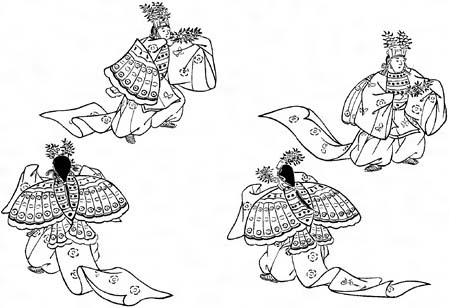
kochō no mai 胡蝶楽〈舞楽図譜 宮内庁書陵部蔵〉

The image of a Chinese child with butterflies also extends to ancient Japan, when there was a tradition of kochō no mai 胡蝶の舞 (butterfly dance) inherited from China. As a part of gagaku 雅楽 court music performance, four young boys would dress as butterflies, attaching yellow wings to their outfits, and perform dances for the imperial court.

Below, you’ll find a video of Hiroi-sensei explaining the top, along with transcripts of his explanation.

***

***

Hiroi Michiaki:   This is, um, “A karako (Chinese child) playing with butterflies.” A karako is… [literally] a Chinese child [a child dressed in a Chinese fashion], but in Japan they’re said to be the messengers of the God of Luck. The God of Luck orders them to go do something, “Go here, go there.” And when he requests many things, it is said that this karako goes about taking care of it. They’re good omens. This, if you spin it, the butterflies look like they’re fluttering and fluttering, flying about.

Paula Curtis:      Um, in ancient times there was also a “butterfly dance,” right?

HM:   Mm. Ahhhh [yes].

 PC:   From China.

HM:  Yes, there is. They move around with the same feeling as that.

Janell Landis:     Looks like butterflies flying.

HM:       Yeah.

JL:           Uh huh.

HM:       If you spin it here a little, [it looks that way] because [the butterflies] clatter about.

JL:           Right.

HM:  The butterflies look like they’re fluttering flying about. This is the “Chinese child (karako) playing with butterflies”…