Tag Archives: Hiroi Michiaki

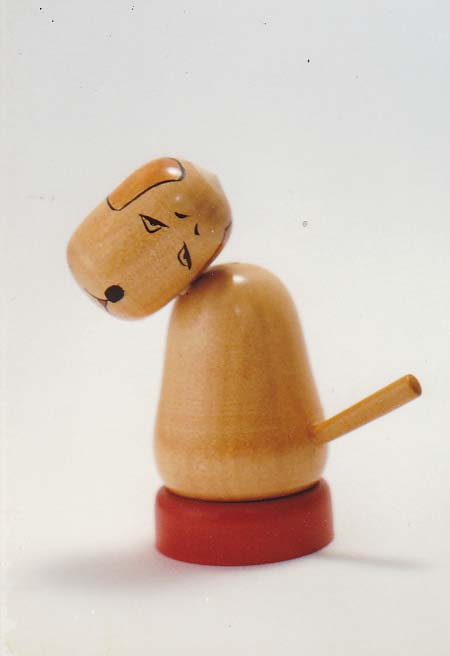
すね犬

Click to enlarge.
Click to enlarge.

タイトル:

すね犬 (sune inu)
“sulking dog”

=====================

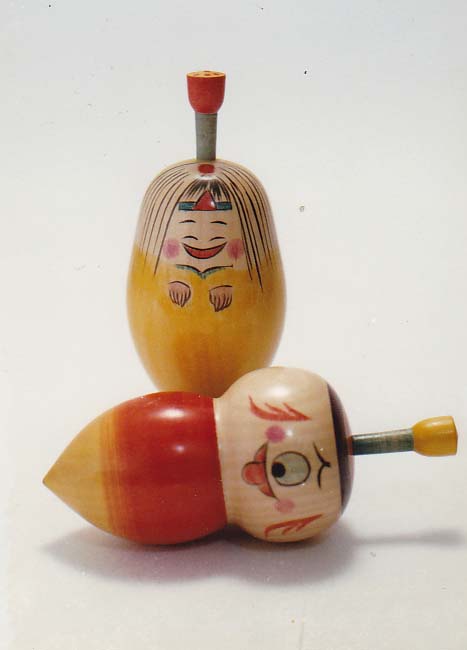
すね犬の独楽である。この犬が拗ねている理由は、下側の独楽に描かれている世の中の苦しみに耐えているからである。 写真に写ってはいないが、下側の独楽に描かれているのは天狗とおかめの絵であり、生殖や性的な意味付けがあるものと思われる。犬の頭としっぽは取り外しが可能で組み合わせると独楽にすることができる。

**天狗は日本の民間伝承に登場し、神や妖怪の仲間と考えられる生き物である。よく面倒を引き起こす存在とされており、天狗の長い鼻は性や子孫繁栄を象徴するものである。

**おかめは日本の面によく使われる大衆的なキャラクターで、狂言や田楽の舞台や行事などでよく見られるものである。おかめは質素な表情の女性で、この独楽では天狗とともに生殖を象徴するものとして描かれているものと思われる。

***

***

廣井道顕:んん。

廣井夫人:それはわんこ。

ジャネル・ランディス:へへへ。

廣井:これが説明するの大変なんだよな。

夫人:んー、下、下にも絵が描いてあるから。

廣井:これどう説明したらいいんだ。うん・・・どう説明したらいいかな・・・とにかくこれをはずすと―

夫人:うん、全部はずれるの。

廣井:頭とこれと独楽にはなるんですけどね。

夫人:頭。

廣井:で、こう、下にね、絵が描いているんですよ。天狗とおかめの絵が描いていて… あぁ・・・んと、要するに世の中の悩みをここに表しているのね。で、すね犬って、犬がすっかり困って。

夫人:そう。

廣井:悩んでいるっていう。

ジャネル・ランディス:んふふふ。

廣井:で日本の場合はこういうのは、あの縁起がいい、ものなんですね。あの・・・子孫繁栄とか。いろいろと。すごく縁起のいいものなんですけど。説明がちょっと、うん、ちょっと難しいな。へへへ。要するに世の中の煩悩を表している、うん、独楽なの。

猪 (wild boar)

Click to enlarge.
Click to enlarge.

Title:

猪 (inoshishi)
“wild boar”

=====================

This top depicts a wild boar. Wild boar are often found in the mountains of Japan. When the top is spun, the boar below taps its feet as if digging its hooves into the ground. Hiroi-sensei made this design to celebrate the year of the boar.

***

***

Hiroi Michiaki: This is a wild boar.

Mrs Hiroi: Mm.

Hiroi: This… I wonder if this is one I made in the year of the boar.

Mrs. Hiroi: Yeah.

Hiroi: When you spin it, the boar goes tap tap tap tap tap

Janell Landis: (laughs)

Hiroi: It’s like it’s going around digging and doing this, you know?

Click to enlarge.
Click to enlarge.

タイトル:

猪 (inoshishi)
“wild boar”

=====================

猪を模して作った独楽。猪は日本の山でよく見かける動物である。独楽を回すと、猪がヒヅメで地面を掘っているかのように独楽の猪の脚がコツコツと音を立てる。廣井先生は亥年のお祝いにこの独楽を作った。

***

***

廣井道顕:これは猪。

廣井夫人:うん。

廣井:こりゃあ・・・猪年の年んときに作ったやつかな。

夫人:うん。

廣井:これ回すとこう猪がこう、タッタッタッタッ・・・

ジャネル・ランディス:(laughs)

廣井:こう掘ってこうやっているような感じがするのね。


お化け(obake [monster/spirit])

Click to enlarge.
Click to enlarge.

Title:

お化け(obake)
“obake (monster/spirit)”

=====================

This top depicts an obake (monster/spirit). In Japanese folklore, obake (or sometimes bakemono 化け物) are types of preternatural creatures similar to monsters or spirits that can take many forms. Their main characteristic is an ability to transform. They sometimes disguise themselves as humans (though their true form may be an animal such as a fox or cat) or can be normal household objects that transform themselves into demonic creatures (see tsukumogami). They are distinct from the spirits of the dead, although sometimes ghost-like apparitions can be called obake or bakemono.

This top is designed so that when you use a string to wind up the top and spin it, it looks like the spooky obake is staggering about.

***

***

Hiroi Michiaki: This is an obake (monster/spirit), right.

Paula Curtis: Yes. [Top] number twelve.

Hiroi: This one, as you can see, when you spin it, the obake staggers about.

Janell Landis: Hehehe.

Hiroi: When you wrap the string around this one, too, and zip it off, it goes around like this, lolling around as it spins.

お化け

Click to enlarge.
Click to enlarge.

タイトル:

お化け(obake)
“obake (monster/spirit)”

=====================

お化けをテーマにした独楽。日本の昔話で、お化け(化け物とも言われる)は怪物や霊魂などと類似した超自然的な存在として扱われており、様々な形で描かれている。主な特徴として挙げられるのが変身する能力があること。時にお化けは人間にも化けることがある(本当の姿はキツネやネコなどの動物)また家庭にある一般的な物でも化け物に姿かたちを変えることもある(付喪神についての説明)お化けは死者の霊とは区別されているものの、時には幽霊や亡霊のようなものがお化けや化け物と呼ばれることもある。

糸を巻いて独楽を回すと不気味なお化けがゆらゆらと動いている姿に見えるようにデザインされた独楽である。

***

***

廣井道顕:これはやっぱお化けだよね。

ポーラ・カーティス:はい。十二(番)。

廣井:このもん、このまま、見た通りで、回すと、ね、お化けみたくフラフラ回る。

ジャネル・ランディス:フフフ。

廣井:これも糸を巻いてね、ビュッてやると、こうやって、ぐらぐらぐらぐら回るのね。

天女の舞 (the heavenly maiden’s dance)

010
Click to enlarge.

Title: 天女の舞 (tennyo no mai)
“the heavenly maiden’s dance”

=====================

This top depicts the dance of the heavenly maiden, a story connected to Japan’s version of the swan maiden folklore. Variations on this story typically include a beautiful young woman spotted bathing in the woods by a male hero. While she bathes, he steals her feathered robe (or an article of clothing) from where it hangs on a tree branch, which prevents her from changing back into her magical bird form to escape. He then forces her to become his wife.

Hiroi-sensei has created a top that mimics the heavenly maiden dancing at the top of a mountain as she descends from the sky. Made up of two different tops, this set is particularly difficult to spin. First you must spin the bottom half (the mountain), then carefully balance the second top on the very tip of the first, so that it begins to rotate from the force of the lower half. Balanced properly, the maiden appears to be dancing as she rotates in opposition to the mountain’s spin.

***

***

Hiroi Michiaki: And this is, ah—this is the heavenly maiden’s dance.

Mrs. Hiroi:   The heavenly maiden’s dance.

HM:  This is Mt. Fuji, below Mt. Fuji… Umm, at the base of the mountain, there’s a pine forest. It’s also included now in the World Heritage sites. Now, Mt. Fuji and that pine grove… what pine grove was it…

MH:   Some kind of pine forest.

HM:   There, long ago the heavenly maiden came down [from the sky] dancing, and she hung her feather robe in the pines… and a young hunter or someone takes it, and even though the heavenly maiden asked him to return it, he didn’t, I suppose. Somehow or another there are other things [that happen] and many interesting stories there. It’s a top modeled on that [story]. As it turns it looks like the heavenly maiden teetering around [dancing] on top of the mountain.

Janell Landis: Th-That [one], spinning it is hard.

HM:     (laughs) It’s kind of hard, yeah.

MH:   Mmm… it doesn’t spin easily.

JL:        And, um, when you put it on the handle and it, and it stays on, it’s incredible. But I’ve gotten gradually worse at it. And, that, this um, when… ah, that thing like bamboo, you wrap the string around it and put it in the bamboo, and it suddenly it spins. Then you have to, to use your hands to do the top. (claps)

HM:     (laughs)

JL:        Over and over she falls, but when you finally get it spinning [on top], boy it’s wonderful. Sensei, um, I won’t talk anymore after this, but I, that story, um…

Paula Curtis:    You thought it was Kaguya-hime.

JL:        Kaguya-hime. Yeah.

HM:     Ahhh…

JL:        I-I used Kaguya-hime.

HM:     Kaguya-hime.

JL:        When I was gone away. I-I used it in connection with her. Yeah.

HM:     Yeah, it’s a similar story. Was it called the “Heavenly Feather Robe”? Mm.

天女の舞

010
Click to enlarge.

タイトル: 天女の舞 (tennyo no mai)
“the heavenly maiden’s dance”

=====================

天女の舞がテーマの独楽である。天女の話は海外の民話・伝承にある白鳥の乙女の日本版のようなものである。色々なバリエーションがある中で一般的に含まれるのが、男の主人公が森で水浴びをする美しい若い女性を見つけるという点である。女性の入浴中に、木の枝にかけてある女性の羽衣(または服)を盗んでしまい、鳥の姿に戻ることができず逃げることができなくなる。それから主人公は女性を強引に自分の妻にする。

廣井先生は空から舞いおりてくるかのように山の頂上で舞う天女を表現した独楽を作った。二つの異なる独楽でできており、セットで回すのが非常に難しい。まず最初に下半分(山の部分)の独楽を回し、次に注意深く二つ目の独楽を下半分の独楽の上にのせると、下の独楽の力で上の独楽が回り始める仕組みになっている。きちんとバランスを取ることができると、下半分の山の独楽とは逆の方向に回る天女が舞っているように見える。

***

***

廣井道顕:  で、これが…あ、これは天女の舞。

廣井夫人:  天女の舞。

廣井: これ富士山、富士山の下・・・ええとう、ふもとの方にあのう、松林があるんですよね。え、なんて今世界遺産の中にそれも、は、含まれたね、今度ね、富士山と… あの松原… 何の松原っつたっけ…

夫人:  なんとかの松林…

廣井: そこに昔あの天女が舞降りて、羽衣を松の間に引っかけたやつを… 何か、猟師の若者か何かが、それ取って、天女が返してくれっつうのに、返さなかったっつたかな、それで、何だか何だかっていう色々ある、あの面白い話があるんですけど。それを象った独楽なんですよね。富士山の上にこの天女が回ってるように回すと見えるフラフラってね。

ジャネル・ランディ: そ、それは回すのは大変。

廣井: (laughs) あはは、ちょっと難しいね。

夫人:  うぅん・・・なかなか回んない。

ジャネル:      そして、あのう、when you put it on the handle and it, and it stays on, 素晴らしいもん。けど私だんだん下手になった。そして、その、これした、あのう、いつま、あの、ah… bambooみたいな、それ紐をつけてそれをbamboo入れて、そしてザアアアとすると it spins. Then you have to, to use your hands to do the top. (claps)

廣井: (laughs) あははは・・・

ジャネル:      何回も何回も彼女が落ちて、やっとつければ boy, it’s wonderful. 先生、あのう、もう話しませんけれども、私はその話は、あのう、um…

ポーラ・カーティス:   あの、かぐや姫だったと思って…

ジャネル:      かぐや姫. Yeah.

廣井: あぁ、あぁ、あぁ・・・

ジャネル:      I-I used Kaguya-hime.

廣井: かぐや姫。

ジャネル:      When I was gone away. I-I used it in connection with her. Yeah.

廣井: 似たような話だね。これ天の羽衣っつったっけか。な。

泥鰌と田螺 (loach and pond snail)

Click to enlarge.
Click to enlarge.

Title:

泥鰌と田螺 (dojō to tanishi)

“loach and pond snail”

=====================

This top depicts a loach and pond snail. These are freshwater aquatic animals, often found in ponds. Hiroi-sensei stated that these tops are meant to be good luck charms for protection against fires, since both are water creatures.

***

***

Hiroi Michiaki: This is… a pond snail and a loach.

Mrs. Hiroi:   Mm. Pond snails are in paddy fields.

HM:   It was a pond snail and a loach, or I have a feeling it might have been a horned turban snail and a loach…

MH:  It’s a pond snail and a loach.

HM:   And, um, this is the shell of the pond snail in the paddy and then the loach. You put those together and it [becomes] a top, and this… it’s a charm for protection against fire– these creatures live in the water, so [it makes it so] fires won’t happen. [This] top is that kind of charm.


泥鰌と田螺

Click to enlarge.
Click to enlarge.

タイトル:

泥鰌と田螺 (dojō to tanishi)
“loach and pond snail”

=====================

泥鰌と田螺がモチーフの作品。泥鰌と田螺はよく池で見かける、淡水に生息する生き物である。廣井先生は、この独楽のモチーフは両方とも水の生き物なので火伏のお守りとして作った作品であると説明していた。

***

***

廣井道顕:  これが―・・・タニシとドジョウね。

廣井夫人:  うん。タニシ田んぼにある。

廣井:  タニシとドジョウだったか、サザエとドジョウだったような気がするんだけど・・・

夫人:    タニシとドジョウだよ。

廣井:  で、あのう、これはあの田んぼにいるタニシって貝と、あとドジョウね。それ組み合わせの独楽で、これはあのう・・・火伏のおまじないって、水の中にいるから、火事にならないようにっていう、そういうおまじないの独楽なんです。

The Hiroi Family during WWII

Originally from Tokyo, Hiroi’s family suffered great loss as a result of the air raids that destroyed the city and killed hundreds of thousands of people during World War II. Listen as he describes how his family fled Tokyo to start a new life in Tōhoku, his first impressions of American soldiers, and his feelings about the war.

This clip has been slightly edited from the original interview for clarity. A transcript of this clip can be found below. And a full transcript of our interview with Hiroi can be found here[forthcoming].

===========================================

Paula Curtis:  If it’s alright, I’d like to talk a little bit about the war time, but, about that time, what kind of memories do you have?

Hiroi Michiaki:   What…

PC:         The war time.

Hiroi:   What time?

PC:         The war time. War.

HM:       Ahh when we were at war. The war time. Of course I didn’t do any of that. War. I was absolutely against it. Mm. But even so, everyone was killed. Not one of my classmates is alive. Everyone was killed in the air raids. And the people of my neighborhood, too, all of them, there’s no one left.

PC:   And your family, at that time…?

HM:         My younger brother and mother, even now their whereabouts are unknown, but I think they died. When a notice came, it was said you [could] confirm [a death], you know. But I can’t confirm theirs. In the air raids, everyone had burned to death, and it was impossible to tell what was what, whom was whom…. And since it was said that since their death couldn’t be actually confirmed, we couldn’t get a notice. It was said they were missing (lit. “whereabouts unknown”)… And even now their whereabouts are, well, unknown.

[00:08:53]

PC:         Where was your home at that time?

HM:       Mmm, properly speaking, in Tokyo, Kōtō ward, Ooshima. It was a place called Ooshima, but it was “Ooshima-machi 3-chōme, #400.” That was our permanent residence.

PC:         And what kind of life did you have?

HM:       The same. The same as now.

PC:         Which is to say…?

HM:       Mm. My father, well, he made many things.

PC:         Then, at that time [he made] Edo-style tops, um—

HM:       Yeah. During the war, things that “unnecessary”, so-called “luxuries,” were forbidden. And, hmm, we received this sheet, like a label. If you didn’t post that, you couldn’t sell [anything]. And they were allotted, how many [you received] per month. So you couldn’t [sell] anything more than that, and furthermore, as if that weren’t bad enough, we were required to make–what do you call them?– military supplies, for use during the war.

[00:10:13]

PC:         Ohh…  Did you or your family contribute in some way to the war?

HM:       Not really effort, but everyone, mm, at that time we couldn’t say anything. If we did, the military police would come and we’d be arrested, and if we did something bad it was terrible. And everyone, well, it was that way for all Japanese people. Everyone would say “We’ll win! We’ll win!” and be happy. But there were a number of people who said that there was no way that Japan could win, and they’d be arrested. So no one could say anything, and in their hearts absolutely hated war. And family, workers, everyone who felt that way withered away, and most died, and there was no compensation. In my home, too, even though everything–my parents and siblings, our property–was lost in the raids, there was no compensation. Not a single word of apology. I want the emperor to apologize, you know. And, at Yasukuni Shrine, you know, why does the Japanese Prime Minister visit it? It’s strange, but nothing can be done. I feel a great sense of discomfort about that. More than the people of Korea and China, I get angry [about that].

PC:         And just after the war, what were your neighbors’ impression towards America and Americans where you lived?

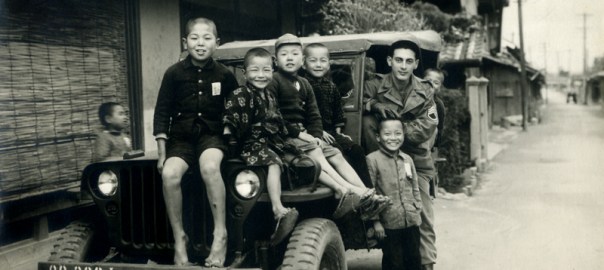
HM:       Mmm. At first… it was the first time I’d seen them, so. Hahaha. Americans… Umm… We didn’t know that Japan had lost the war. That is, our home  [in Tokyo] was burned down in the air raids, so we came here, deep into Shiroishi mountain, mmm there’s a place called Kamasaki hot springs, [famous for] Yajirō kokeshi, there’s a place called Kokeshi village, but, on the other side of that mountain, there was a small cabin, a small mountain cabin, and we lived there. It was a place without electricity or water. Umm… We were there not knowing at all that the war was lost. And when my father went to the town of Shiroishi, somehow the atmosphere of the town had changed, and when he asked, they said Japan had lost. And there, he said that we couldn’t pass the winter in that mountain cabin, and so we came down and moved to the town of Shiroishi, but that time was the first time I saw American soldiers, and man, their Jeeps…! They rode them in and I was like “Ooooh!” and was so surprised. Hahaha. “What is this?” I wondered.

[00:13:36]

PC:         The attitude [towards them], what kind of attitude was it? For example, towards the Americans driving the Jeep.

HM:       Ahh… rather than what kind [of attitude]… We were surprised. We were shocked. And when I thought, “These were the people we fought with?” I also thought, “We couldn’t have beaten them, could we?” [laughs] I wondered why we did something so senseless. Rather, I was angry at the top people [in Japan]. Even though they were the elite, even though they should have understood us, why did they do something so absurd, so unreasonable, and kill Japanese people? Well… my home had done that and become the sacrifice, and no one, not the government, not the people connected to that government, no one said  a word in apology; they didn’t compensate us for anything. Rather [than the Americans], I was mad at them.

PC:         And your impression was what?

HM:       To the Americans?

PC:         Yes.

HM:       Ahh, I thought they were incredible. Really, umm… these people who were until yesterday enemies, I [didn’t think] they would be such kind people. And I couldn’t understand why we had gone to war. And um, at that time, in Shiroishi, along the national highway, we had rented the home of a farming family, and there we had set up a lathe, and the American soldiers had pipes, those sailor pipes, and smoked tobacco. We were asked to do those repairs, and my father often fixed them.

[00:15:35]

PC:         And after the war, um, how did your life change?

HM:       It entirely changed, and it was a terrible time. As I said just now, you know, there was no compensation, and we were, should I say, without means; we had no money, and even though we came here it didn’t mean we knew anyone, and we didn’t know the dialect here either. And there were many [troubles], and there were a lot of issues with the local people and we hadn’t made friends with them, but now I get along with them and they’re very kind. And I was really helped by them. In any case, there were terrible hardships [at the time]. There was nothing to eat, nothing to wear, the winter was cold. Often I thought I was going to die. Heh heh…

Postcard photograph of a soldier with Japanese children published Kinouya postcard archive, retrieved from Kinouya Postcard Collection.