Category Archives: video

秋保工芸の里について

今回のインタビューでは、廣井先生が秋保工芸の里ができた経緯や工芸の里に住みモノづくりをしている職人たちについて触れている。秋保工芸の里の公式ウェブサイトはこちらのリンクから。ウェブサイトは(機械による)翻訳機能もついており各言語での閲覧も可能。

秋保工芸の里は宮城県の仙台市からバスで35〜40分ほど離れた小さな町、秋保にある。仙台駅からは63番のバス停で、かわさきまち行に乗り、秋保工芸の里で下車。タケヤ交通<秋保・川崎 仙台西部ライナー> 冬季に関しては時刻表に変動あり。

秋保工芸の里のパンフレットはメディアのページで閲覧できる。

===

[Segment 1, 00:30:07]

ポーラ・カーティス:では、少し、あのう、秋保についての、あのう、話に入りますが、あのう、いつ秋保工芸の里に住むことになりましたか。

廣井道顕:ちょうど二十五年前。ここが、オープンしたですけど、その何年前、三年ぐらい前だから、うんんと今から二十、八ヵ年前、八年ぐらい前かな。あの今度うんと、宮城、県で、あのう、こういう工芸の里みたいなのを作るから、一緒に行かないかって声をかけてもらって。で色々集まって話して、で県に行って話して。であのう街中でだんだんあのう、仕事がやりにくくなってきたんですよね。あのう、うるさいとか、ゴミが立つからとかって、公害だ何だって言われて、仕事がだんだんやりにくくなってて、何とかこう、そういう街中から出て、誰にも何も言われない場所を作りたいなっていう話で。であのう、同じ同業ばかりでなくて、色んな異業種の人たちとも一緒になって。ほんで県に交渉して、ではっていうことで、この秋保、まだ仙台市でなかったんですね、秋保は秋保で、秋保町だったんですけど。で秋保町、秋保と、それから県の、山があるから、でそこを、作って、そこにあのうみんな移るように、したらいいんじゃないかっていうことで。最初二十、二十人ぐらいいたんですよ。で、だんだんだんだん煮詰まってって、最終的に、ええ十二件になったのかな。で順で十二ヶ所土地作ったんけど、結果、入ったのが、うーんと八軒。で空いている場所が四ヶ所あって、で後から、一人、入ってきて、その一人の人が二ヶ所まとめて買って。で今も二ヶ所残ってるんですけど。うーん、で結果的に、オープンした時は、うん?待てよ。オープンの後でツルコさんが買ったのか。オープンした時は八軒だったんですね、八人だったのね。それから二年か、三年ぐらいして一軒入って九軒になった。今九軒で。そのままずっと今も続いてるんですけど。

ポーラ:どのような専門ですか。

廣井:ええと、うんだから、あれ、パンフレット見ると一番分かりいい・・・ここで分る。あぁこれがこけし屋さん。こっちの隣。で、ここはうちね。でこれがそっちの。

[Segment 2, 00:00:00]

廣井:これはあのお茶の道具。茶道具を作っている人なんですけど。あとそれからそっちの向かいの・・・トイレの脇が箪笥、仙台箪笥。で、その隣がこの彫刻、やっている人で。その向かいっ側の人がこれ後から入ってきた織物をやってる人。この人が後から入ってきたんですけど。でその隣がやっぱりこけし屋さん。この人は元々 秋保の人で。で秋保でこけしを作って、いた人なんですよね。で地元の人、ただ一人なんですけど。

で後はその隣がこれ埋もれ木って、これもあの、もう全国でただ一人になっちゃったんです。埋もれ木細工っていうの、やっている人なんですけど。これ仙台独特のもので、あのう・・・石炭になる前に亜炭というのがあって、その亜炭にまざって埋もれ木っていう、亜炭層から出てきた、あのう、なんというかな。炭化したような、要するに埋もれている木なんですけど。それ削ってこうやるとすごく素晴らしいのができるので。で仙台の名物で、何人も職人さんいたんですけど今たった一人になっちゃってんの。

で、これ、これがその隣で、これがほら、あのう、伝統こけしの先生。私が教わった先生のところ、我妻さんってね。でこの近辺なのか、今。だからあのう、同業の方は二軒、こけし屋さん・・・あ二軒、三軒か。あぁ。こけしやってた人は三軒、あぁ俺もやってたから四軒か。ま、こけし屋さんが多いね。うん。こけし屋さん以外が一店、二店、三軒、四軒。んー五軒か。でこけしやってた 、こけしばかりでなく、こういう轆轤っていうんで色々、ま江戸独楽も含めてですけど、そういうのが四軒で。で九軒ですね。


小春日 (a warm winter day)

Click to enlarge.
Click to enlarge.

Title:

小春日 (koharubi)
a warm winter day

=====================

This piece depicts a calm, early winter day that feels like autumn. An old woman sits dozing on her veranda stroking a sleepy cat that basks in the sun.

***

***

Hiroi Michiaki: Umm this is– what is this? I think it’s “a warm winter day.”

Mrs. Hiroi: Yeah something like that.

Hiroi: This [top] is an old lady on the veranda, holding a cat basking in the sun. And they’re dozing off.

小春日

Click to enlarge.
Click to enlarge.

タイトル:

小春日 (koharubi)
early autumn day

=====================

穏やかな小春日がテーマの作品。おばあさんが縁側でまどろんでいる猫を撫でながら、うたた寝している。

***

***

廣井道顕:えぇとこれは、これは何だ?小春日かな。

廣井夫人:あぁなんか。

廣井:これはあの、おばあさんが、縁側で、日向ぼっこしるの、猫抱いて。で、うつらうつらとしてっとこ。


雷さまのたいこつり (the thunder god’s taiko fishing)

Click to enlarge.
Click to enlarge.

Title:

雷さまのたいこつり (kaminarisama no taikotsuri)
the thunder god’s taiko fishing

=====================

This top depicts the thunder god. In this scene, the thunder god has dropped the taiko drum he uses to create the sound of thunder. He leans over the side of a cloud and uses a hook to try to reclaim his fallen drum. When you spin the uppermost top, the thunder god clatters back and forth, having difficulty trying to hook his drum.

***


***

Hiroi Michiaki: And this is the thunder god, it’s called “Raikō’s taiko-drum fishing.” While the thunder god is thumping the taiko drum to sound the thunder, he drops the drum and can’t make thunder anymore. In his haste he tries to fish for his drum from atop a cloud, tries to snag it on the hook. If you spin this, he clatters about and can’t easily ensnare [the drum]. And in the middle of that he stops thundering. It’s that sort of top.

雷さまのたいこつり

Click to enlarge.
Click to enlarge.

タイトル:

雷さまのたいこつり (kaminarisama no taikotsuri)
the thunder god’s taiko fishing

=====================

雷さまがモチーフの独楽である。雷さまが雷の音を鳴らすために使う太鼓を落としてしまったという場面である。雲の端に身を乗り出し、かぎ針を使って落ちてしまった太鼓を取り戻そうとしている。一番上にある独楽を回すと、雷さまはカタカタと音を立てて前後に揺れるので、太鼓を取り戻すのが難しくなってしまう。

***

***

廣井道顕:で、これがね。これは雷さん、雷公の太鼓釣りっつって、雷さんがあのゴロゴロって鳴らす太鼓叩いてるうちに落っことしちゃって、鳴らなくなっちゃったから、慌てて雲の上からこの太鼓を釣りあげようとして、針で引っ掛けて。でこれ回すとやっぱりこうガタガタして、なかなか引っ掛からない。で雷が、途中で鳴りやんでしまったという、そういう独楽ですね。


花独楽

Click to enlarge.
Click to enlarge.

タイトル:

花独楽 (hana koma)
flower tops

=====================

花束がモチーフの独楽である。花一つ一つが、花の茎を模した木の棒にバランスよく付けられている。それぞれ外すと独楽になる。

***

***

廣井道顕:で、これは花独楽っつって、あの、そっちにあるよね。

廣井夫人:うん。


ナンキンさん (Nanking-san)

Click to enlarge.
Click to enlarge.

Title:

ナンキンさん (nankinsan)
Nanking-san

=====================

This top depicts a Chinese person with a queue hairstyle, which was traditionally worn by Manchu men and later became a hairstyle imposed on the Han Chinese in the seventeenth century, during the Qing dynasty. Despite its foreign origins, the image of men’s queue hairstyle came to be popularly seen by the West as a quintessentially Chinese. Playing with this stereotypical image, Hiroi-sensei whimsically stands the queue pigtail straight up in the air to become the handle of the top.

***

***

Hiroi Michiaki: Umm what is this. Oh, it’s Nanking-san. Nanking-san is… Long ago Japan greatly respected China, and so Chinese people were called Nanking-san, and so it was like [unintelligible]. That pigtail–in the past Chinese people grew out their hair. This top puts that hair high up into the air, and makes it the handle of the top that spins it.


ナンキンさん

Click to enlarge.
Click to enlarge.

タイトル:

ナンキンさん (nankinsan)
Nanking-san

=====================

辮髪をした中国人、ナンキンさんがテーマの独楽である。辮髪は元々満州の男性がしていた髪型だが、17世紀 清代の漢民族のイメージを示す髪型となった。外来の文化であるにも関わらず、辮髪のイメージは西洋において典型的な中国人のイメージとして見られるようになった。廣井先生は固定概念とも言えるこのイメージを使い、独楽の軸を辮髪の編んだ髪に見立てて回せるようにした。

***

***

廣井道顕:ううんと、これが何だ、やっぱりナンキンさんか。ナンキンさんってこれは・・・昔の日本はあのう、中国をすごく尊敬してて、だから中国人を、ナンキンさんとかって呼んで。___ある※、みたいな部分で。その、これあの辮髪ってあの中国、昔中国の人髪の毛長く伸ばしてた。それをこう持ちあげて頭のてっぺんにつけて、独楽の芯にして回してる独楽。

(※___の部分は不明瞭で聞き取れず、文字に起こすことができませんでした。)

後ろの正面 (behind you [Kagome Kagome])

Click to enlarge.
Click to enlarge.

Title:

後ろの正面 (ushiro no shōmen)
Behind You (Kagome Kagome)

=====================

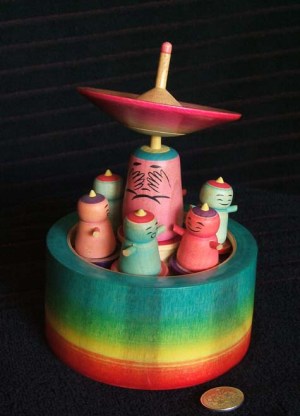
This piece depicts a game called “Behind You” (ushiro no shōmen), also known as Kagome Kagome (bird in the basket/cage). In this popular Japanese children’s game, one person is selected to be the oni (ogre), and must sit with their hands covering their eyes or blindfolded. The other players, who represent human children, hold hands and circle around the oni player, singing:

The bird in the basket/cage, (Kagome Kagome)

When, oh when will it come out
In the night of dawn
The crane and turtle slipped
Who is behind you now?

When the song ends, the oni player must guess who is standing directly behind them. Hiroi-sensei plays with the image of the oni in the middle; instead of showing an oni surrounded by human children, he represents all the players as oni, with the figure in the middle as a large parent oni being circled by its children. When you spin the top above the central oni, it makes the oni below move and spin.

***

***

Hiroi Michiaki: And this… ahh, this is called “Behind You,”* that “It’s Behind You!” children-

Mrs. Hiroi: Children play it.

Hiroi: —play it; it’s a type of game from long ago. You pick someone to be an oni (ogre) [in the middle], and the oni’s children are playing [around them]. And the oni parent covers their eyes, and if you spin this, the oni spins around and around, and this turns while it spins. And while singing you do it like this, and an older girl says, “Who’s behind you?!” and everyone suddenly stops. And the oni will name who’s in front of them, like “It’s so-and-so!” and the others go “You got it! [Or] you’re wrong!” It’s a children’s game. I’ve made them oni, so, it’s not the normal children [in the game, where only the one in the middle is an oni], but [now] an oni and oni children.