Category Archives: video

お竹さんの行水

Click to enlarge.
Click to enlarge.

タイトル:

お竹さんの行水 (otakesan no gyōzui)
Otake’s Bath

=====================

この作品では他人をいびる意地悪な金持ちの男についての訓話(教訓を伴う話)をテーマにしている。ある夏の日、意地悪な男は働き者の女中であるお竹が庭で行水しているのを覗きに行く。しかし男がいざ覗いてみると、お竹はその姿を変え、行水をしていたのが実は観音菩薩(如意輪観音と呼ばれることもある)であったことが判る。観音菩薩は女中のお竹に化け、人に対して意地悪をするのは善くないことであり、嫌なことばかりしていると、そのうち罰が当たるということを諭し、教えた。その後、金持ちの男は改心し善い行いをするようになった。

***

***

廣井道顕:これがね、お竹さんの行水か。これも話が色々あるんだけど。ううんと、これはね、あの、昔あの、意地の悪い、ええ・・・やっぱ金持ちか。大金持ちだけど、うんと意地が悪くて、あの、貧乏人をいじめていた人がいたんだって。そこの屋敷に、この女中奉公・・・という、今で言うと何て言ったらいいのかな・・・要するに下働きの・・・ううん・・・に、あの、女中さんと言ったけど、お竹さんていう人が、ううん・・・今で言うとなんでぇ女中さんは。なんつったらいいんだ。分かりやすく言うと、どう言ったらいいのかな・・・お手伝いさんだね、要するにね。

ジャネル・ランディス:手伝いさんだ。うん、うん。

廣井:であのう、一番、位が一番低くて、こき使われるんだけど。で、そのお竹さんが、夏熱いときに庭先で行水をしていたらば、その因業の金持ちがこう覗きに来たの。でそのときに、このお竹さんが、本当はあの、ええと、観音様・・・菩薩か?観音菩薩だ。観音菩薩が、あの戒めるために、この下女、女中に化けて。であのその、人をいじめては、ダメだよっていうことを教えるために、わざとこうやって、見えるように行水を使って。でこう出て来た所で、観音菩薩になって。で悪いことしてると、仏さんの罰が当たるぞって、諭して。その金持ちが改心して、善いことをしたっていう、謂れの、あの、ううん、お竹さんの行水なんですね。


なりごま (howling top)

Click to enlarge.
Click to enlarge.

Title:

なりごま (narigoma)
howling top

=====================

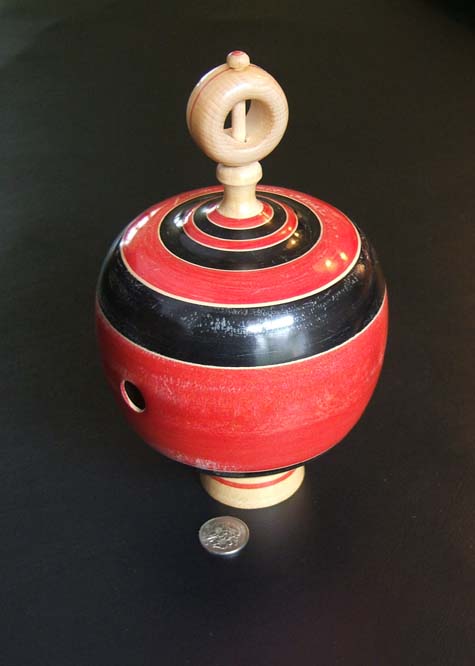
This top is a special type of top called narigoma (鳴り独楽), or a “howling top.” The hole in the side allows air inside, so when it is spun it makes a whistling noise. Click here to see a video of a narigoma being spun.

***

***

[commentary is embedded along with the previous top’s commentary]

Hiroi Michiaki: Umm this is…

Paula Curtis: It’s a dance, right?

Hiroi: It’s a night festival. If you spin it, inside it [looks like] they’re dancing. This is a paper lantern. Actually this is a howling top. A noise comes out of it.

Janell Landis: He made it for me.

Hiroi: Mm… Newton-san really liked night festivals. And later, he came even after Landis-sensei was gone, and, and what was it? He bought a number [of tops]. And one of them couldn’t move properly and he came all the way here, and I remember fixing it for him.

なりごま

Click to enlarge.
Click to enlarge.

タイトル:

なりごま (narigoma)
howling top

=====================

この作品は鳴り独楽と呼ばれる特殊な独楽である。独楽の側面に開いた穴から空気が入ることで、独楽を回した際に、ヒューという音を出す。鳴り独楽を回した時の映像はこちらのリンクから。

***

***

[解説は前の独楽と同じ]

廣井道顕:ええとこれが…これは

ポーラ・カーティス:踊りですね。

廣井:夜祭だね。これ回すとこの中がね、ちょうど踊ってるように。これ提灯だね。でこれは、やっぱり鳴り独楽。音が出るやつね。

ジャネル・ランディス:私のために、作ってくだすった。

廣井:うん・・・この夜祭あのニュートンさんが大好きで。でその後、ランディス先生いなくなった後も来て、でこれ、何だ。何個か買ってもらったんだな。でそのうちの一個が、ちょっと動かなくなったんだ、なんて、わざわざ来て、直してやった覚えある。

夜祭 (night festival)

Click to enlarge.
Click to enlarge.

Title:

夜祭 (yomatsuri)
night festival

=====================

This top depicts a night festival. When it is spun, the little figures at the center of the base look as if they are dancing. Hiroi-sensei also comments on the next top in the collection, which is a howling top (narigoma) that whistles when spun.

***

***

Hiroi Michiaki: Umm this is…

Paula Curtis: It’s a dance, right?

Hiroi: It’s a night festival. If you spin it, inside it [looks like] they’re dancing. This is a paper lantern. Actually this is a howling top. A noise comes out of it.

Janell Landis: He made it for me.

Hiroi: Mm… Newton-san really liked night festivals. And later, he came even after Landis-sensei was gone, and, and what was it? He bought a number [of tops]. And one of them couldn’t move properly and he came all the way here, and I remember fixing it for him.

夜祭

Click to enlarge.
Click to enlarge.

タイトル:

夜祭 (yomatsuri)
night festival

=====================

夜祭がテーマの独楽。独楽を回すと、土台にある小さな人形が踊っているように見える。廣井先生はコレクションの中で夜祭の次に登場する独楽が回すと音の出る鳴り独楽であることについても、このインタビューの中で言及している。

***

***

廣井道顕:ええとこれが…これは

ポーラ・カーティス:踊りですね。

廣井:夜祭だね。これ回すとこの中がね、ちょうど踊ってるように。これ提灯だね。でこれは、やっぱり鳴り独楽。音が出るやつね。

ジャネル・ランディス:私のために、作ってくだすった。

廣井:うん・・・この夜祭あのニュートンさんが大好きで。でその後、ランディス先生いなくなった後も来て、でこれ、何だ。何個か買ってもらったんだな。でそのうちの一個が、ちょっと動かなくなったんだ、なんて、わざわざ来て、直してやった覚えある。


花咲ぢいさん (The Old Man Who Made the Dead Trees Blossom)

Click to enlarge.
Click to enlarge.

Title:

花咲ぢいさん (hanazaka jiisan)
The Old Man Who Made the Dead Trees Blossom

=====================

This piece depicts the folktale “The Old Man Who Made the Dead Trees Blossom.” There are many versions of the story. One is that an old couple loved their dog dearly, and one day the dog dug up gold in their garden. An envious neighbor, thinking the dog must be able to sniff out treasure, stole the dog and had it dig in his own garden. But when the dog only dug up bones, he killed it and told the couple it had died naturally.

The old couple buried the dog under the fig tree where it had dug up the treasure, and that night the old man had a dream the dog told him to chop down the tree and use it to make a mortar for pounding mochi. He did so, and the rice they put into the mortar turned into gold. The neighbor also saw this and took the mortar, but the rice he put inside turned to dirt instead, so his wife burned the mortar and destroyed it. That evening, the dog returned to his master in a dream and told him to sprinkle the ashes of the mortar on nearby cherry trees. The old man did so, and the trees bloomed, and a passing daimyo (military lord) who saw them praised the old man and showered him with gifts. When the neighbor jealously tried to sprinkle the ashes as well, they blew into the daimyo’s eyes, and the daimyo threw the neighbor into prison. When he was released, he was banished from his village and had nowhere to live.

***

***

Hiroi Michiaki: And what is this? Ahh! The Old Man Who Made the Dead Trees Blossom. Hm? The Old Man Who Made the Dead Trees Blossom?

Mrs. Hiroi: Yeah, it’s that.

Hiroi: Mm. Yeah. It’s The Old Man Who Made the Dead Trees Blossom.

Mrs. Hiroi: It spins around and around. If you spin it from the top.

Hiroi:  Ummm, this is The Old Man Who Made the Dead Trees Blossom. When [the old man] saved an adorable dog, as thanks, um… it barked for him to dig [in this spot], and when he dug there large and small gold coins came out. And later, when he was pounding mochi, I think the mochi turned to gold. It turned to gold. And the wicked old man next door felt bitter towards him. So he burned the mortar and mallet [for pounding mochi].  And the [first] old man took the ashes and scattered them and flowers bloomed from the withered trees there. And he was praised by his local lord. It’s an old legend… that goes like that.


花咲ぢいさん

Click to enlarge.
Click to enlarge.

タイトル:

花咲ぢいさん (hanazaka jiisan)
The Old Man Who Made the Dead Trees Blossom

=====================

昔話の『花咲ぢいさん』がテーマの独楽。花咲ぢいさんには様々なバリエーションがある。そのうちの一つは、飼い犬をとても可愛がっていた老夫婦がおり、ある日その犬が自分の家の庭で金を掘り当てるという話である。それを嫉んだ隣のじいさんは、犬が宝のにおいを嗅ぎ分けるのだと考え、犬を盗み自分の家の庭を掘らせる。しかし犬が骨ばかり掘り当てるので、じいさんは犬を殺してしまい老夫婦には犬は勝手に死んでしまったと伝える。

老夫婦は犬が宝を掘り当てた場所であるイチジクの木の根元にその亡骸を埋めてやった。その夜、飼い主のおじいさんは夢を見る。夢の中で犬がイチジクの木を切って餅をつくための臼を作るようにおじいさんに告げる。おじいさんが言われた通りにすると、臼に入れた米が金に変わった。隣の住人はこれも見ていたので臼も盗むが、臼に入れた米は汚物に変わってしまったので、ばあさんがその臼を燃やし灰にしてしまった。その夜、犬はまた飼い主のおじいさんの夢に現れ、臼の灰をそばにある桜の木に振りかけるようにと告げる。おじいさんがまた言われた通りにすると、桜の木に花が咲き、そばを通りかかってそれを見ていた大名がおじいさんを称え、褒美を山ほど与えた。隣の住人は羨ましがり臼の灰を同じように撒こうとするが、大名の目に灰が飛んでしまい、大名はじいさんを牢屋に入れてしまった。牢屋から出てきたじいさんは、村から追放され住む場所もなくなってしまった。

***

***

廣井道顕:で、こっちは何だ?あ、あぁ!花咲じいさんだ。ん?花咲じいさん?

廣井夫人:そうだよ、それ。

廣井:うん、そうだね。花咲じいさんね。

夫人:ぐるぐる回るの。上回すと。

廣井:ううんと、これは花咲じいさん。かわいがっていた犬を助けてやったらば、そのお礼で、あのう・・・ここ堀れワンワンってやつか。で、ここそこ掘ったら色々大判、小判が出てきて。であと、餅をついたらば、この餅が、ううん・・・黄金になったっていうのか。金になったの。であの、隣のいじわる爺さんが、それをあの、悔しがって。この臼と杵を燃やしてしまったのね。でその灰を、ここへ入れて、この花咲じいさんが、この灰を撒くと、あの枯れた木にも花がバッと咲いた。で、お殿様にえらく褒められたっていう。それ昔話ね・・・の流れでね。


のんべ坊主 (drunk priest)

Click to enlarge.
Click to enlarge.

Title:

のんべ坊主 (nonbe bōzu)
drunk priest

=====================

This top depicts a drunk priest. He is holding an octopus to snack on and a gourd full of sake. When you spin it from the top it appears he is staggering about.

***

***

Hiroi Michiaki: Mm, this is a drunk priest. He’s a priest that’s drunk on sake and he’s staggering about. He’s holding an octopus, a boiled octopus, and there’s sake in his gourd. This priest, I wonder if he was in there [in the workshop]. Um, if you spin this, in any case, the priest lolls about and spins. He’s drunk.


のんべ坊主

Click to enlarge.
Click to enlarge.

タイトル:

のんべ坊主 (nonbe bōzu)
drunk priest

=====================

のんべい坊主の独楽。坊主は肴の茹蛸と酒の入った瓢箪を持っている。独楽を回すと坊主が千鳥足で歩いているように見える。

***

***

廣井道顕:うん、これは酔っ払い坊主で。坊さんが酒飲んで酔っ払って、フラフラしてっとこね。蛸を、茹蛸を持って、これ瓢箪の中にお酒が入ってるの。この坊さん、その辺にねかったかな。えっと、これ回すと、とにかくこの坊さんがぐらぐらぐらぐら回って。酔っ払ってるのね。

About Akiu Craft Park


In this interview segment, Hiroi-sensei speaks briefly about the establishment of the Akiu Craft Park and the types of artisans who live and work there. You can visit the official webpage for Akiu at this link, which explains about the many artisans working there. The page also includes an option to translate it (via machine) into foreign languages.

Akiu Craft Park is about 35-40 minutes by bus from Sendai, Japan, located in the small town of Akiu. From Sendai station, board the bus going towards Kawasaki-machi (かわさきまち行) at the #63 bus stop, getting off at Akiu kōgei no sato (秋保工芸の里). This will be the purple Takeya tours bus, the タケヤ交通<秋保・川崎 仙台西部ライナ>. Some schedule changes may occur in winter months.

A scanned version of the Akiu Craft park pamphlet is uploaded in the Media section of our page.

===

[Segment 1, 00:30:07]

Paula Curtis: And let’s talk a little about Akiu. When did you start living at Akiu Craft Park?

Hiroi Michiaki: It was about twenty-five years ago.  That was from when it opened, but some years before that, about three years, ummm about twenty–eight years ago, I guess. I was asked “We’re going to make something like a craft village in Miyagi prefecture, so won’t you join us?” And many [artisans] came together and talked, came to the prefecture and talked. In the town it had gradually become difficult to do our work, you know? Because it was loud, or the garbage would pile up, it was said to be a nuisance, and so it became difficult to do our work, and the topic came up that we wanted leave the town and make a place where no one would say anything [about it] to us. And not just people doing the same occupation, but people of many different types of work joined us. And we negotiated with the prefecture and it slowly moved along. Akiu wasn’t the city of Sendai, it was the town of Akiu. And [we negotiated with] the town of Akiu, with Akiu and the prefecture, and there was a mountain, so we made it there, and it was said that we should all move there. There were about twenty, twenty of us at the beginning. And gradually we ended up with about twelve houses in the end, I think. We had the land for twelve homes, but in the end about eight were constructed and there were four open lots. And after one more person came, and that person bought and combined two lots. Even now there’s two left. Umm… in the end, when we opened—huh? Wait. Did Tsuruko-san buy it after we opened? There were eight houses when we opened, eight people. And two or three years later another house went up and we were nine houses. And now it’s nine houses. And it’s been the same ever since.

Paula: What kind of specialties did the other artists have?

Hiroi: Umm… ah, it’s easiest to understand if you look at the pamphlet… You’ll see here. Ahh this is a kokeshi maker. The one next door to here. And this is us. And this is that one.

[Segment 2, 00:00:00]

Hiroi: These are tea ceremony utensils. He makes tea ceremony utensils. And then there’s– like the one over there, the cabinet next to the toilet– Sendai [style] cabinets. Next to [the tea ceremony person] there’s a man who does this carving. Across from him is the woman who came later [after we set up Akiu Craft village], who does textiles. She joined us after. And next to her of course is a kokeshi maker. That person is originally from Akiu and made kokeshi in Akiu. He’s the only person originally from here.

And next to him is a bogwood [carver], and he’s also now the only person in the entire country [who has that skill]. He’s called a “bogwood artisan” [umoregi saiku]. This is something particular to Sendai… there’s something called “brown coal” (lignite) that [is formed] before it becomes coal, and wood that is buried in and mixes with that brown coal– it comes from the brown coal class [of materials]– what should I call it? It’s more or less this is wood that has been buried and carbonized. If you carve it into things it’s gorgeous, so it’s a famous thing from Sendai, and there used to be a number of artisans [who carved bogwood], but now there’s only one.

And this [other] one is next to him, and he’s a, you know, sensei of traditional kokeshi. When I was taught [kokeshi making] it was Wagatsuma-san. Is he in this area now? So, for people of the same craft it’s two houses, two kokeshi makers, or is it three? Ahh. There’s three doing kokeshi. Oh, I also did it, so it’s four. Well, at any rate there’s a lot of kokeshi makers. Mm. Other than the kokeshi makers there’s one, two, three, four houses. Mm five? And there were four places that did kokeshi, but not just kokeshi but other pieces that were made using the lathe, well, including Edo tops, and there were four of them. And that’s nine.