Category Archives: transcripts

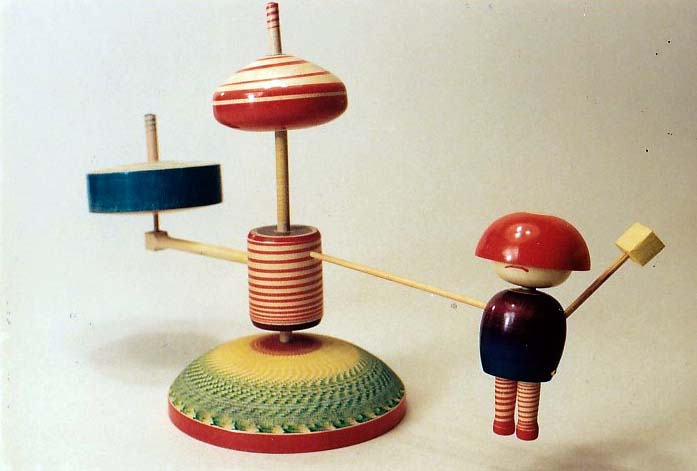
追かけ独楽

Click to enlarge.

タイトル:

追かけ独楽 (oikake koma)
“chasing top”

=====================

追かけ独楽は中央にある大きな独楽が二つの円盤状の小さな独楽を回転させるようデザインされている。円盤の独楽はとても軽く、回転しながらお互いを追かけ、時に後ろの円盤が前の円盤を飛び越え追い越す。廣井先生のお話では、このタイプの独楽では「ウサギとカメ」の童話がモチーフとして使われるのをよく見かけるが、以前はこの廣井先生の作品に描かれているように、犬に追かけられる泥棒がモチーフとして使われていたという。ビデオクリップでは、廣井先生が手ぬぐいを頭に巻いた日本の泥棒のイメージについてお話ししている。

廣井先生が独楽について日本語で説明している際のビデオとインタビュー記録はこのキャプションの下にあります:

***

廣井道顕:   この二番のこれは、あぁ、

廣井夫人:  追いかけ。。。

廣井:  泥棒と犬だな。

夫人:  うん、そうだ。

廣井:  あの追いかけ独楽。この間みた、あの、ぐるぐる回る、兎と亀が。

夫人:  兎と亀なんだけど今回は。前は泥棒と犬だった。

廣井:  これ、泥棒を犬が追いかけて、で、犬が泥棒を追い越しちゃった。

ジャネル・ランディス:   先生、日本の泥棒は〔のの〕手ぬぐいを、こうして

廣井: あ。そうそうそうそう。。

ジャネル:  こうして、それも書いてあれからかわいいの。

廣井: 泥棒かぶりってね、手ぬぐいでこう。

ジャネル:   They hide the face.

夫人:  MH: そう。

廣井: ここに手ぬぐいねえな。

夫人:  あるじゃん。赤いもん。

ジャネル:   That’s alright. It’s… oh. 私たちホテルから手ぬぐいをもらったね。

廣井: こうやってね。泥棒、なぜかね、こういうふうにして。(ties tenugui) ここの鼻の下で結ぶんだよな。

ジャネル:   あははは。

廣井: こうやってこうやって。こうやって入ってくる。それであのう、かっぱらったやつをこうやって、しょって、逃げる時に犬がワンワンワンワンと追いかけきてから、荒てて逃げる。ところが、この犬のほうが先に行ってしまう。

ジャネル:   His tale in Japanese. Robbery.

廣井: そういう、あの、ふざけた感じの。で、犬が追い越すとみんな手ばたきして喜ぶのね。ということ。

飛脚

Click to enlarge

タイトル: 

飛脚 (hikyaku)
“courier”

=====================

この独楽は前近代に自らの脚で各地へ駆け回り書簡などを届けていた飛脚をモチーフにした作品である。独楽を回すと、脚が前後に揺れ動き まるで必死に駆け回り自らの職務をこなす飛脚の姿に見える。

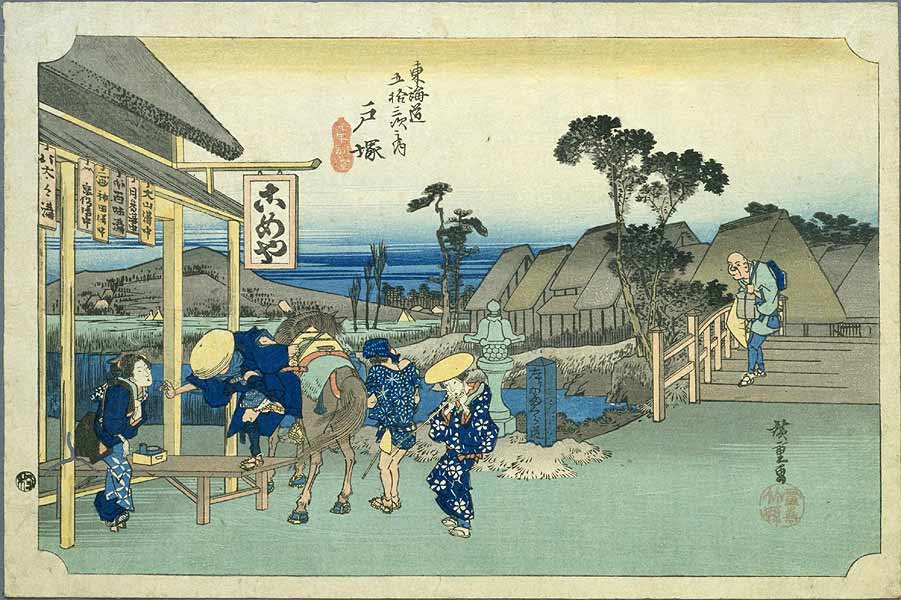
53 Stations of the Tokaido (Totsuka), Hiroshige, 1831-4.

鎌倉時代後期(1185-1333年)以降、馬を用いた速達飛脚の制度が存在したものの、道路の状況が大いに改善され、より安全になった江戸時代(1600-1868年)には馬を利用した飛脚または飛脚の脚がより頻繁に利用された。飛脚は厳しい天候から身を守るため よく蓑笠を身に着けていた。左にある江戸時代の浮世絵の中でも、おそらく馬を使う飛脚であろう笠をかぶった男が馬から降りる姿が見てとれる。

廣井先生が独楽について説明している映像と、そのインテビュー記録がこのキャプションの下にあります。

***

廣井道顕:   これは、あのー、飛脚って言って、今で言うと、何だ・・・郵便。あの、手紙なんかを、こう・・・

ジャネル・ランディス:             あぁ、そうそうそう。うん。うん。

廣井:             ここに、あの、持って、昔ほら、みんな歩いてたから、この飛脚はこう、マラソンだね、要するにね。駆け出してこう行って、んで、あのー宿場、宿場にこう、届けて。で、順繰り順繰りに行って、日本中どこでも行ってた昔の、郵便。これ回すと この足がプラプラしてね。すっとね、駆け出してるように見えんのね。

ジャネル:          そうそうそう。 When you spin it.

廣井:           うん。で、こう、ぐるーっと回る。

飛脚 “courier”

Click to enlarge.

Title: 

飛脚 (hikyaku)
“courier”

=====================

This top depicts a courier in premodern times traveling back and forth to deliver his messages on foot. When the top is spun, his legs swing back and forth as though he is running about frantically on his duties.

53 Stations of the Tokaido (Totsuka), Hiroshige, 1831-4.
53 Stations of the Tokaido, Hiroshige, 1831-4.

Although a system of express messengers by horse existed from the late Kamakura period (1185-1333), with the vastly improved roads and greater safety in the Edo period (1600-1868), messengers were sent out by horse or by running on foot. They often wore straw hats or jackets to shield themselves from inclement weather. In the Edo period ukiyo-e print to the left, you can see a man with one of these hats, possibly a horse-riding courier, dismounting.

Below, you’ll find a video of Hiroi-sensei explaining the top in Japanese, along with a transcript in English:

*****

Hiroi Michiaki:        This is, um, called a courier—what do you say nowadays? A postal [worker.] Umm, he takes letters and such.

Janell Landis:        Ahh, yes yes yes. Mm. Mm.

Hiroi:         He holds [his bag] here, and in the past, everyone walked, so the courier does this, [like] a marathon, in a way. He runs off going like this, and delivers [his letters] in various post stations in turn, and goes everywhere in Japan. A postal worker of the old days. When you turn this [part] these legs swing. Then it looks like running legs.

Janell:          Yes yes yes. When you spin it.

Hiroi:          And it spins around here.

ペンシルバニア州ボイヤータウンのジャネル

2013年10月13日、テネシー州プレザント・ヒルにあるジャネルの自宅で私たちは口述歴史インタビューを行った。まずペンシルバニア州ボイヤータウンで育ったジャネルの幼少時代について質問を始めた。この音声クリップではジャネルが自分の家族、両親の職業、家族が経験したツラい時期のこと、幼い頃の教会での記憶について語っている。


テーマを明確にするためオリジナルのインタビューを少し編集したクリップとなります。このクリップを文字に起こしたファイルはこのページの下にあります。ジャネルのインタビュー全文はこちらにあります [ 準備中  ]。

===========================================

ジャネル・ランディス:ペンシルバニア州ボイヤータウンの生まれよ。正確にはボイヤータウンの隣の小さな村だったみたいだけど、それについて私は覚えてないわね。ふふふ…でも、そう、ボイヤータウンで育ったの。フィラデルフィアから40マイルほど北にある場所。高校もそこ、高校卒業までボイヤータウンで学校教育を受けたわ。ほかに何が知りたい?

マリナ・スーティ [1:05]:ご家族について少し伺えますか。

ジャネル:そうね、あの頃 父と母には娘が一人、私の姉のロアがいた。私は二人目の子どもでね。すごく素敵な二世帯住宅に住んでいたの。私が生涯に家族と住んだ家の中で一番いい家だった。私が3歳か4歳か5歳くらいになるまでそこに住んでいたと思うけど、そうだわ、あれは幼稚園に入る前だったもの。家に帰って勝手口に行ったら差し押さえの貼り紙がしてあったのよ、私たち家族は家を失った。それから別の家に引っ越した、そこにはまだ室内にお手洗いが付いていたわね、2、3年くらいそこに住んだわ。1か月10ドルの家賃で住めるアパートを食料雑貨店の裏手に見つけたこともあったっけ、あははは。 もちろん父は当時政府の元で働いていた。しばらくの間はWPA(Works Project Administration)※に勤めていたわ。

公共事業促進局

そして、そうね、幼少時代は本当に良かった。7年後に母が女の子を授かって、その一年後にはもう一人、男の子が生まれたの。4人姉弟になったわ。でも私と姉 二人だけの姉妹だったときは世界大恐慌の中でも一番不景気の頃だった。それから景気が少し上向いてきたから、家族を増やしたのね。

マリナ[10:38]:教会へは通いましたか?

ジャネル:ええ。そう。私はドイツ改革派 の出なの、そこはグッド・シェパード教会だったわ。ボイヤータウンにはルター派と改革派の二つの大きな教会があった。子どもの頃、小学校3学年の担任の先生がライト・ブリゲード※に連れて行ってくれたの、月一でね…そしたら誰が先生のカバンを持つかで子ども同士もめて言い合いになってね、ほら、その集会へ向かうときのカバン持ちよ。ルーテル教会の牧師の息子さんとケンカしたのを覚えているわ、たしか私が勝ったと思う。私がカバンを持ったもの。

※light brigade – 教会が開いた子ども達向けの集まり

マリナ[3:02]:お父様はWPAでどんなお仕事を?

ジャネル:WPAは、あの頃、町で路面電車の線路を取り外していたわ。ボイヤータウンを通って、どこか南の方へ行く路面電車があったの、どこまで遠くに行ったのか私も定かじゃないわね、おそらくはポッツタウンの近くまでじゃないかと思うのだけど、でも とにかくWPAは路面電車の線路を外していた。私が覚えているWPAの仕事はそれね。そのこと以外で父が何をしていたかは知らないの。

Janell001マリナ[3:32]: お母様はお仕事を?

ジャネル:  えぇ、していたわ。母は13、14人兄妹の一人だったの。だから私には いとこが山ほどいてね。当時は私が親戚の子どもの中で最年少だった。いとこたち、おばたち、おじたちがいた。楽しかったわ。 それに父にも男兄弟2人と女兄弟が一人いて、違ったわ、女3人男3人の兄弟だったわね。でも父の両親や親戚もいて。父は母の体調が思わしくなくて私たち子どもの面倒を見られないと思ったから、父方のおば がこの小さな町に来て私たちの面倒を見ることにしたの。私たちの絆は強くなった、本当にたくさんのいとこ、おば、おじに恵まれて、愛情に飢えることなんてなかったわ。

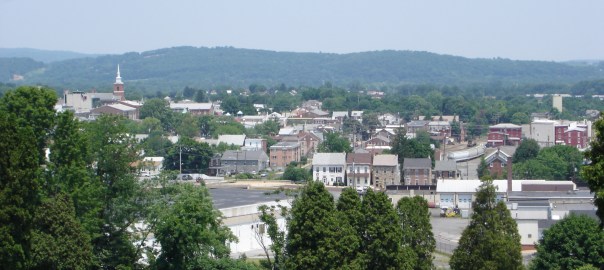
Photograph of Boyertown, PA by Skabat169 published under GNU Free Documentation License via Wikimedia Commons. Photograph of Janell as a toddler via Janell Landis.

次回は『学校でのジャネル』

Janell in Boyertown

On October 13th, 2013, we sat down with Janell at her home in Pleasant Hill, Tennessee to begin our oral history interview. We started with Janell’s early life, growing up in Boyertown, Pennsylvania. In this audio clip you’ll hear Janell describing her family, her parents occupation, hard times they went through, and an early memory of her church.


This clip has been slightly edited from the original interview for clarity and theme. A transcript of this clip can be found below. And a full transcript of our interview with Janell can be found here [forthcoming].

===========================================

Janell Landis:  I was born in Boyertown, Pennsylvania. Actually a little village next to Boyertown, but I don’t remember (laughs). But uh, I grew up in Boyertown. It’s about forty miles north of Philly. Had my high school, all of my education up through high school in Boyertown. Anything else?

Malina Suity [1:05]: Tell us a little bit about your family.

Janell: Well, at that time my father, mother had one daughter, my sister Loah. And I was the second child. They were living in a very nice double home. It was the nicest home we had in all my life. And I remember coming home–I guess we lived there until I was maybe three or four or five, yeah cause, before kindergarten. I remember coming home and we went in the back door and there was a foreclosure sign that we lost the house. Then we moved to another place which still had indoor plumbing and we lived there about two years or so. I think we found a place in an apartment behind a grocery store and it was ten dollars a month rent (laughs). And of course my father was employed by the government.  Worked on the WPA for some time.

And um, I had a very good childhood. Seven years later my mother had a baby girl and then a year after that another child, a boy. There were four of us. But it was in the height of the Depression when my older sister and I were the only children. Then when there was a little upturn, we had a larger family.

Malina [10:38]: And did you attend church?

Janell: Yes. Yes. I came out of the German Reform Church and that was the Good Shepherd Church. We had two big churches in Boyertown, the Lutheran Church and the Reform Church. And as a child, my third grade teacher would take me to a [light brigade], that meant monthly… and we’d quarrel with each other to ‘fess who was going to carry the teachers satchel, you know, to the meeting. I remember fighting with a Lutheran Church pastor’s son, and I think I won. I could carry the bag.

Malina [3:02]: What did your father do for the WPA?

Janell: They were, at that time, the town was removing the trolley tracks.  We had a trolley going through Boyertown and all the way down to uh, I don’t know how far it went, I think probably to the nearby Pottstown, but anyway they took out the trolley tracks. And that was the work that I remember them doing. Otherwise I don’t remember what he was doing.

Malina [3:32]: Did your mother work?Janell001

Janell: No. She did… she was one of about thirteen or fourteen children. So I had a whole lot of cousins. I was the youngest cousin at that time. I had cousins and aunts and uncles. It was neat. And my father had a couple brothers and one sister, no three sisters and three brothers. But his parents and relatives too, he thought my mother wasn’t well and couldn’t take care of us one of my father’s aunts would come and look at after us in this small town. So we were a close knit group and I really was so blessed with many cousins and aunts and uncles, so I never starved for affection.

Photograph of Boyertown, PA by Skabat169 published under GNU Free Documentation License via Wikimedia Commons. Photograph of Janell as a toddler via Janell Landis.

Next time– “Janell at School”