Tag Archives: koma

花咲ぢいさん

Click to enlarge.
Click to enlarge.

タイトル:

花咲ぢいさん (hanazaka jiisan)
The Old Man Who Made the Dead Trees Blossom

=====================

昔話の『花咲ぢいさん』がテーマの独楽。花咲ぢいさんには様々なバリエーションがある。そのうちの一つは、飼い犬をとても可愛がっていた老夫婦がおり、ある日その犬が自分の家の庭で金を掘り当てるという話である。それを嫉んだ隣のじいさんは、犬が宝のにおいを嗅ぎ分けるのだと考え、犬を盗み自分の家の庭を掘らせる。しかし犬が骨ばかり掘り当てるので、じいさんは犬を殺してしまい老夫婦には犬は勝手に死んでしまったと伝える。

老夫婦は犬が宝を掘り当てた場所であるイチジクの木の根元にその亡骸を埋めてやった。その夜、飼い主のおじいさんは夢を見る。夢の中で犬がイチジクの木を切って餅をつくための臼を作るようにおじいさんに告げる。おじいさんが言われた通りにすると、臼に入れた米が金に変わった。隣の住人はこれも見ていたので臼も盗むが、臼に入れた米は汚物に変わってしまったので、ばあさんがその臼を燃やし灰にしてしまった。その夜、犬はまた飼い主のおじいさんの夢に現れ、臼の灰をそばにある桜の木に振りかけるようにと告げる。おじいさんがまた言われた通りにすると、桜の木に花が咲き、そばを通りかかってそれを見ていた大名がおじいさんを称え、褒美を山ほど与えた。隣の住人は羨ましがり臼の灰を同じように撒こうとするが、大名の目に灰が飛んでしまい、大名はじいさんを牢屋に入れてしまった。牢屋から出てきたじいさんは、村から追放され住む場所もなくなってしまった。

***

***

廣井道顕:で、こっちは何だ?あ、あぁ!花咲じいさんだ。ん?花咲じいさん?

廣井夫人:そうだよ、それ。

廣井:うん、そうだね。花咲じいさんね。

夫人:ぐるぐる回るの。上回すと。

廣井:ううんと、これは花咲じいさん。かわいがっていた犬を助けてやったらば、そのお礼で、あのう・・・ここ堀れワンワンってやつか。で、ここそこ掘ったら色々大判、小判が出てきて。であと、餅をついたらば、この餅が、ううん・・・黄金になったっていうのか。金になったの。であの、隣のいじわる爺さんが、それをあの、悔しがって。この臼と杵を燃やしてしまったのね。でその灰を、ここへ入れて、この花咲じいさんが、この灰を撒くと、あの枯れた木にも花がバッと咲いた。で、お殿様にえらく褒められたっていう。それ昔話ね・・・の流れでね。


のんべ坊主 (drunk priest)

Click to enlarge.
Click to enlarge.

Title:

のんべ坊主 (nonbe bōzu)
drunk priest

=====================

This top depicts a drunk priest. He is holding an octopus to snack on and a gourd full of sake. When you spin it from the top it appears he is staggering about.

***

***

Hiroi Michiaki: Mm, this is a drunk priest. He’s a priest that’s drunk on sake and he’s staggering about. He’s holding an octopus, a boiled octopus, and there’s sake in his gourd. This priest, I wonder if he was in there [in the workshop]. Um, if you spin this, in any case, the priest lolls about and spins. He’s drunk.


のんべ坊主

Click to enlarge.
Click to enlarge.

タイトル:

のんべ坊主 (nonbe bōzu)
drunk priest

=====================

のんべい坊主の独楽。坊主は肴の茹蛸と酒の入った瓢箪を持っている。独楽を回すと坊主が千鳥足で歩いているように見える。

***

***

廣井道顕:うん、これは酔っ払い坊主で。坊さんが酒飲んで酔っ払って、フラフラしてっとこね。蛸を、茹蛸を持って、これ瓢箪の中にお酒が入ってるの。この坊さん、その辺にねかったかな。えっと、これ回すと、とにかくこの坊さんがぐらぐらぐらぐら回って。酔っ払ってるのね。

小春日 (a warm winter day)

Click to enlarge.
Click to enlarge.

Title:

小春日 (koharubi)
a warm winter day

=====================

This piece depicts a calm, early winter day that feels like autumn. An old woman sits dozing on her veranda stroking a sleepy cat that basks in the sun.

***

***

Hiroi Michiaki: Umm this is– what is this? I think it’s “a warm winter day.”

Mrs. Hiroi: Yeah something like that.

Hiroi: This [top] is an old lady on the veranda, holding a cat basking in the sun. And they’re dozing off.

小春日

Click to enlarge.
Click to enlarge.

タイトル:

小春日 (koharubi)
early autumn day

=====================

穏やかな小春日がテーマの作品。おばあさんが縁側でまどろんでいる猫を撫でながら、うたた寝している。

***

***

廣井道顕:えぇとこれは、これは何だ?小春日かな。

廣井夫人:あぁなんか。

廣井:これはあの、おばあさんが、縁側で、日向ぼっこしるの、猫抱いて。で、うつらうつらとしてっとこ。


雷さまのたいこつり (the thunder god’s taiko fishing)

Click to enlarge.
Click to enlarge.

Title:

雷さまのたいこつり (kaminarisama no taikotsuri)
the thunder god’s taiko fishing

=====================

This top depicts the thunder god. In this scene, the thunder god has dropped the taiko drum he uses to create the sound of thunder. He leans over the side of a cloud and uses a hook to try to reclaim his fallen drum. When you spin the uppermost top, the thunder god clatters back and forth, having difficulty trying to hook his drum.

***


***

Hiroi Michiaki: And this is the thunder god, it’s called “Raikō’s taiko-drum fishing.” While the thunder god is thumping the taiko drum to sound the thunder, he drops the drum and can’t make thunder anymore. In his haste he tries to fish for his drum from atop a cloud, tries to snag it on the hook. If you spin this, he clatters about and can’t easily ensnare [the drum]. And in the middle of that he stops thundering. It’s that sort of top.

雷さまのたいこつり

Click to enlarge.
Click to enlarge.

タイトル:

雷さまのたいこつり (kaminarisama no taikotsuri)
the thunder god’s taiko fishing

=====================

雷さまがモチーフの独楽である。雷さまが雷の音を鳴らすために使う太鼓を落としてしまったという場面である。雲の端に身を乗り出し、かぎ針を使って落ちてしまった太鼓を取り戻そうとしている。一番上にある独楽を回すと、雷さまはカタカタと音を立てて前後に揺れるので、太鼓を取り戻すのが難しくなってしまう。

***

***

廣井道顕:で、これがね。これは雷さん、雷公の太鼓釣りっつって、雷さんがあのゴロゴロって鳴らす太鼓叩いてるうちに落っことしちゃって、鳴らなくなっちゃったから、慌てて雲の上からこの太鼓を釣りあげようとして、針で引っ掛けて。でこれ回すとやっぱりこうガタガタして、なかなか引っ掛からない。で雷が、途中で鳴りやんでしまったという、そういう独楽ですね。


花独楽

Click to enlarge.
Click to enlarge.

タイトル:

花独楽 (hana koma)
flower tops

=====================

花束がモチーフの独楽である。花一つ一つが、花の茎を模した木の棒にバランスよく付けられている。それぞれ外すと独楽になる。

***

***

廣井道顕:で、これは花独楽っつって、あの、そっちにあるよね。

廣井夫人:うん。


ナンキンさん (Nanking-san)

Click to enlarge.
Click to enlarge.

Title:

ナンキンさん (nankinsan)
Nanking-san

=====================

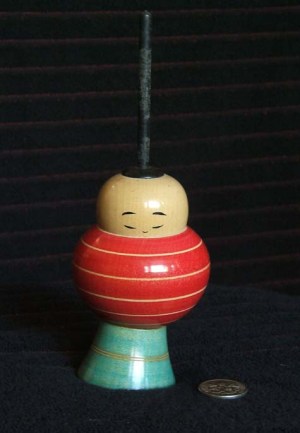
This top depicts a Chinese person with a queue hairstyle, which was traditionally worn by Manchu men and later became a hairstyle imposed on the Han Chinese in the seventeenth century, during the Qing dynasty. Despite its foreign origins, the image of men’s queue hairstyle came to be popularly seen by the West as a quintessentially Chinese. Playing with this stereotypical image, Hiroi-sensei whimsically stands the queue pigtail straight up in the air to become the handle of the top.

***

***

Hiroi Michiaki: Umm what is this. Oh, it’s Nanking-san. Nanking-san is… Long ago Japan greatly respected China, and so Chinese people were called Nanking-san, and so it was like [unintelligible]. That pigtail–in the past Chinese people grew out their hair. This top puts that hair high up into the air, and makes it the handle of the top that spins it.