Tag Archives: Hiroi Michiaki

後ろの正面

Click to enlarge.
Click to enlarge.

タイトル:

後ろの正面 (ushiro no shōmen)
Behind You (Kagome Kagome)

=====================

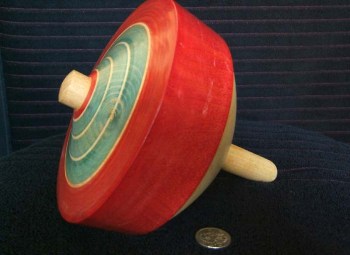
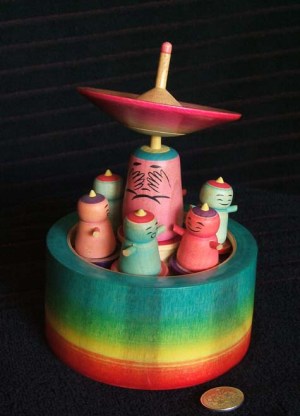
後ろの正面という遊びがテーマの独楽である。後ろの正面はかごめかごめ(籠の中の鳥)の歌でも知られている。日本で大衆的な子供の遊び歌で、一人が鬼になり、手か布で目隠しをしてしゃがむ。他の者は人間の子供という設定で、お互いの手を取って輪になり鬼の周りを回りながら歌を歌う。

かごめかごめ
かごの中の鳥は いついつ出会う
夜明けの晩に
鶴と亀がすべった
後ろの正面だあれ?

歌が終わった時、鬼は自分の真後ろに誰が立っているのか当てなければならない。鬼は本来、中心に一人だけなのだが、廣井先生は周りの子供たちを鬼に変え、中心の鬼を子鬼に囲まれている大きな親鬼にした。中心の親鬼の上にある独楽を回すと、下にある鬼が動き、回るようにできている。

***

***

廣井道顕:でこれが、あぁ、後ろの正面って言われた、あの『後ろの正面だあれ』ってあの、子供達が

廣井夫人:子供遊ぶのね。

廣井:遊ぶ、昔の遊び方なんですけど。それを鬼に作って、鬼の子供が遊んでるんですね。で親の鬼が目隠しして、で、これ回すとこの鬼が回をりグルグルこう、回りながら回る。でなんか歌を歌いながらこうやって、こうお姉さんがこう、後ろの正面だあれってピタッと止まって「何とかちゃん」ってこう当てて「当たった!はずれた」って言って遊ぶ。子供の遊びですね。それを鬼、だからこれを普通の子供でなくて鬼にして、鬼の子供にして。
かえる (frog)

Click to enlarge.
Click to enlarge.

Title:

かえる (kaeru)
frog

=====================

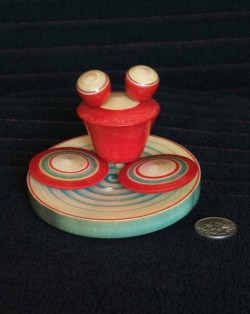
These tops depict a frog in a pond. The frog’s eyes, body, and feet detach from the base (pond) and all become individual tops.

***

***

Hiroi Michiaki: Ahh. This is a frog.

Mrs. Hiroi: Yeah.

Hiroi: There was a frog over there somewhere, too.

Paula Curtis:  Yesterday.

Hiroi: You saw it yesterday.

かえる

Click to enlarge.
Click to enlarge.

タイトル:

かえる (kaeru)
frog

=====================

池のかえるがモチーフの独楽。かえるの目、体、脚は土台(池)から取り外し可能で、それぞれが独楽になる。

***

***

廣井道顕:あぁ、これはかえるだね。

廣井夫人:うん。

廣井:かえるもどっかその辺にあったよね。

ポーラ・カーティス:昨日。

廣井:昨日見たね。

だるま (daruma)

Click to enlarge.
Click to enlarge.

Title:

だるま (daruma)
daruma

=====================

This work depicts a daruma. A daruma is a traditional Japanese doll whose figure is based on the Bodhidharma, the founder of the Zen sect of Buddhism. Daruma are often depicted in this roundish shape because of a legend that the Bodhidharma stared at a wall in intense meditation for nine years, until both his arms and legs fell off. Daruma are traditionally depicted in red, but can appear in various colors with different meanings. They are considered good luck figures.

***

***

Hiroi Michiaki: This is a daruma.

だるま

Click to enlarge.
Click to enlarge.

タイトル:

だるま (daruma)
daruma

=====================

だるまがテーマの独楽。だるまは伝統的な日本の人形で、そのモデルになっているのは仏教禅宗の開祖とされている菩提達磨である。だるまがよく丸い形で表現されるのは、菩提達磨が壁を見つめて座禅を九年もの間 続けたので腕と脚が取れてしまったという伝説から来ている。だるまの伝統的な色は赤であるが、他の色もあり、色によってそれぞれ意味もある。どの色も幸運のシンボルとして考えられている。

***

***

廣井道顕:これだるま。


ミノ虫飛び出し (bagworm larva leaping out)

Click to enlarge.
Click to enlarge.

Title:

ミノ虫飛び出し (minomushi tobidashi)
bagworm larva leaping out

=====================

This top depicts a bagworm larva, the larval stage of the bagworm moth. They are sometimes called “case moths” because their caterpillars build little protective cases in which they gestate. As they emerge, bagworm larva pop their heads out of their case to eat the leaves of the tree they inhabit. In Japan, their popular image is related to the top of their case looking like a straw raincoat. Bagworms are often used as a subject for seasonal haiku in the fall. For this top, Hiroi-sensei depicts a bagworm popping out of its case, which is attached to a tree branch.

***

[no video/transcript]

ミノ虫飛び出し

Click to enlarge.
Click to enlarge.

タイトル:

ミノ虫飛び出し (minomushi tobidashi)
bagworm larva leaping out

=====================

蛾の幼虫、ミノ虫がテーマの独楽である。イモムシのときに自分を温めるためのミノを作るので英語では『ケース・モス(case moths/ ケースは入れ物、モスは蛾)』と呼ばれることもある。住んでいる木にある葉を食べるために、ミノ虫がミノから頭を出す。日本で人気があるのは蓑笠の蓑のように見えるミノがある姿である。ミノ虫は俳句の秋の季語として使われることがよくある。この独楽で、廣井先生はミノ虫が木の枝に付いているミノから顔を出す姿を表現している。

***

[ビデオ・解説なし]

柿つり独楽 (persimmon string-release top)

Click to enlarge.
Click to enlarge.

Title:

柿つり独楽 (kaki tsurigoma)
persimmon string-release top

=====================

This top is a string-release top, which is spun by wrapping a string carefully around the uppermost knob shown in the photo to the right. They are then spun by releasing the top with a sharp toss towards the ground. This string-release top is in the shape of a persimmon fruit.

***

[no video/transcript]