Tag Archives: commentary

提灯鳴り独楽

Click to enlarge.
Click to enlarge.

Title: 

提灯鳴り独楽 (chōchin nari goma)
paper lantern howling top

=====================

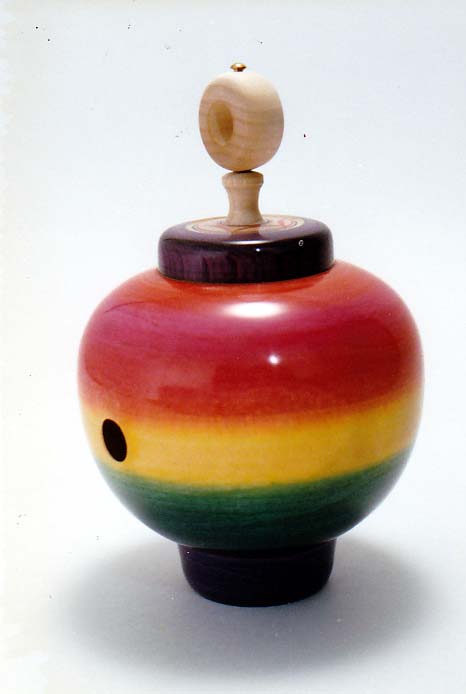
この独楽は提灯の形をしている。特殊な種類の「鳴り独楽」と呼ばれる独楽である。独楽の側面に開いている穴から空気が入るので、独楽を回すと、ヒューという音を出す。鳴り独楽を回した時の映像はこちらのリンクから。

廣井先生が独楽について説明されている際の映像と、インタビュー記録はこのキャプションの下にあります。

***

***

廣井道顕:   これは鳴り独楽で、回すと音がぼおおと出るやつの、その中の一種類で、何か種類かあるんですけど、その中の一種類で、これは提灯鳴り独楽だな。提灯の形をした鳴り独楽だ。

ジャネル・ランディス:   Shaped like a lantern.


追かけ独楽 “chasing top”

Title:

追かけ独楽 (oikake koma)
“chasing top”

=====================

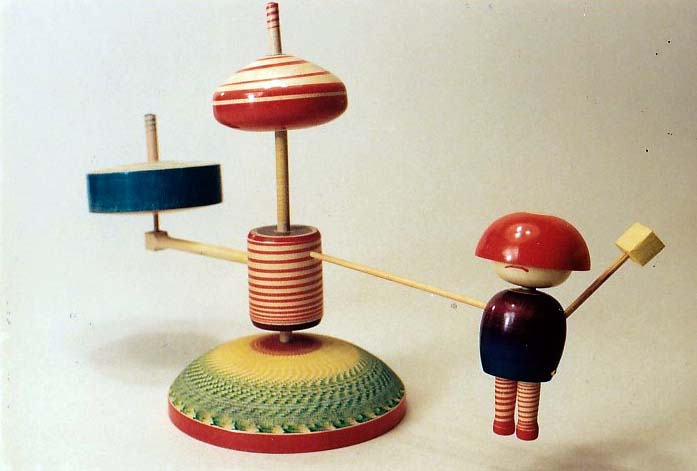
The top depicted here is an oikake koma, or “chasing top.” It is designed to have a large, central spinning top around which two discs rotate. The discs are very lightweight and appear to chase one another, sometimes one leaping over the other as they spin. Hiroi-sensei explained that although the traditional “the tortoise and hare” stories are often seen on this type of top, before that, the imagery of a robber being chased by a dog was used, which he has painted here. In the video clip, he tells us about the Japanese image of a robber with a tennugui (a type of cloth) tied around his head.

Below, you’ll find a video of Hiroi-sensei explaining the top in Japanese, along with transcripts of the clip:

***

Hiroi Michiaki:     Number two, this is…

Mrs. Hiroi:                 Chasing…

HM:                 The thief and the robber, yes.

MH:                 Yeah, that’s right.

HM:                 That chasing top you saw before that, um, spun around, that was the hare and the tortoise.

MH:                 That was the hare and the tortoise this time. But before, it was the thief and the robber.

HM:                 This, the dog pursues the robber, and the dog overtakes him.

Janell Landis:        Sensei, Japanese robbers take the tennugui, and do this…

HM:              Ah. That’s right, that’s right.

JL:                   They do this, that’s drawn there and it’s cute.

HM:                 A thief’s head-covering, a tennugui doing this…

JL:                   They hide the face.

MH:                 Right.

HM:                 We don’t have a tennugui here do we.

MH:                 Don’t we? A red one.

JL:                   That’s alright. It’s… oh. We received tennugui from the hotel.

HM:                 Like this. The thief, for some reason, [ties it] like this, and does it in this way. (ties tenugui) And ties it here under the nose.

JL:                 (laughs)

HM:                 Like this and like this. He does this and enters. And, um he puts the thing he swiped [on his shoulder] like this, and when he runs away the dog barks “Woof woof woof woof!” and when the dog chases him, he panics and runs away, but the dog gets ahead of him.

JL:                   His tale in Japanese. Robbery.

HM:                 It’s that sort of, um, playful feeling. The dog overtakes him and everyone claps and is happy [about it]. That sort of thing.
追かけ独楽

Click to enlarge.

タイトル:

追かけ独楽 (oikake koma)
“chasing top”

=====================

追かけ独楽は中央にある大きな独楽が二つの円盤状の小さな独楽を回転させるようデザインされている。円盤の独楽はとても軽く、回転しながらお互いを追かけ、時に後ろの円盤が前の円盤を飛び越え追い越す。廣井先生のお話では、このタイプの独楽では「ウサギとカメ」の童話がモチーフとして使われるのをよく見かけるが、以前はこの廣井先生の作品に描かれているように、犬に追かけられる泥棒がモチーフとして使われていたという。ビデオクリップでは、廣井先生が手ぬぐいを頭に巻いた日本の泥棒のイメージについてお話ししている。

廣井先生が独楽について日本語で説明している際のビデオとインタビュー記録はこのキャプションの下にあります:

***

廣井道顕:   この二番のこれは、あぁ、

廣井夫人:  追いかけ。。。

廣井:  泥棒と犬だな。

夫人:  うん、そうだ。

廣井:  あの追いかけ独楽。この間みた、あの、ぐるぐる回る、兎と亀が。

夫人:  兎と亀なんだけど今回は。前は泥棒と犬だった。

廣井:  これ、泥棒を犬が追いかけて、で、犬が泥棒を追い越しちゃった。

ジャネル・ランディス:   先生、日本の泥棒は〔のの〕手ぬぐいを、こうして

廣井: あ。そうそうそうそう。。

ジャネル:  こうして、それも書いてあれからかわいいの。

廣井: 泥棒かぶりってね、手ぬぐいでこう。

ジャネル:   They hide the face.

夫人:  MH: そう。

廣井: ここに手ぬぐいねえな。

夫人:  あるじゃん。赤いもん。

ジャネル:   That’s alright. It’s… oh. 私たちホテルから手ぬぐいをもらったね。

廣井: こうやってね。泥棒、なぜかね、こういうふうにして。(ties tenugui) ここの鼻の下で結ぶんだよな。

ジャネル:   あははは。

廣井: こうやってこうやって。こうやって入ってくる。それであのう、かっぱらったやつをこうやって、しょって、逃げる時に犬がワンワンワンワンと追いかけきてから、荒てて逃げる。ところが、この犬のほうが先に行ってしまう。

ジャネル:   His tale in Japanese. Robbery.

廣井: そういう、あの、ふざけた感じの。で、犬が追い越すとみんな手ばたきして喜ぶのね。ということ。

飛脚

Click to enlarge

タイトル: 

飛脚 (hikyaku)
“courier”

=====================

この独楽は前近代に自らの脚で各地へ駆け回り書簡などを届けていた飛脚をモチーフにした作品である。独楽を回すと、脚が前後に揺れ動き まるで必死に駆け回り自らの職務をこなす飛脚の姿に見える。

53 Stations of the Tokaido (Totsuka), Hiroshige, 1831-4.

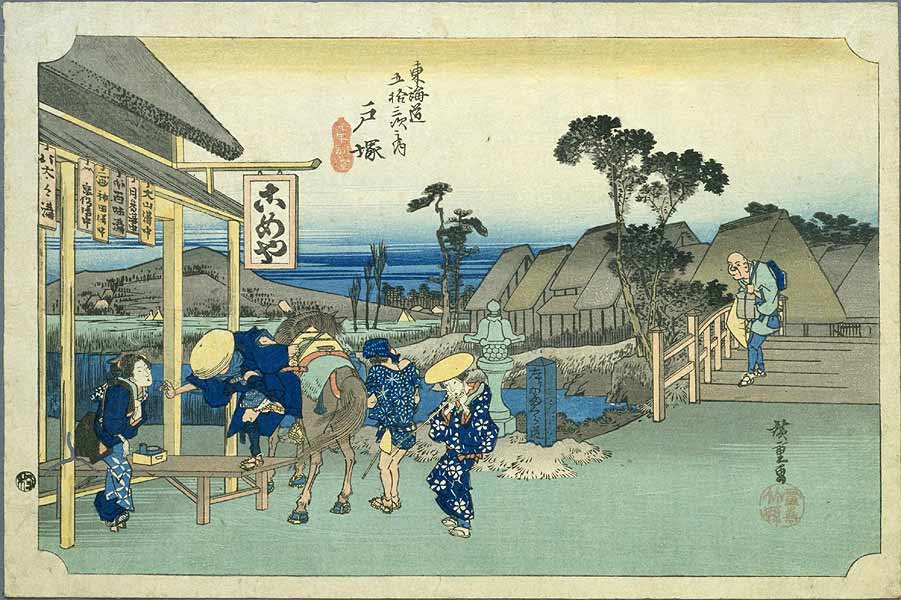
鎌倉時代後期(1185-1333年)以降、馬を用いた速達飛脚の制度が存在したものの、道路の状況が大いに改善され、より安全になった江戸時代(1600-1868年)には馬を利用した飛脚または飛脚の脚がより頻繁に利用された。飛脚は厳しい天候から身を守るため よく蓑笠を身に着けていた。左にある江戸時代の浮世絵の中でも、おそらく馬を使う飛脚であろう笠をかぶった男が馬から降りる姿が見てとれる。

廣井先生が独楽について説明している映像と、そのインテビュー記録がこのキャプションの下にあります。

***

廣井道顕:   これは、あのー、飛脚って言って、今で言うと、何だ・・・郵便。あの、手紙なんかを、こう・・・

ジャネル・ランディス:             あぁ、そうそうそう。うん。うん。

廣井:             ここに、あの、持って、昔ほら、みんな歩いてたから、この飛脚はこう、マラソンだね、要するにね。駆け出してこう行って、んで、あのー宿場、宿場にこう、届けて。で、順繰り順繰りに行って、日本中どこでも行ってた昔の、郵便。これ回すと この足がプラプラしてね。すっとね、駆け出してるように見えんのね。

ジャネル:          そうそうそう。 When you spin it.

廣井:           うん。で、こう、ぐるーっと回る。

飛脚 “courier”

Click to enlarge.

Title: 

飛脚 (hikyaku)
“courier”

=====================

This top depicts a courier in premodern times traveling back and forth to deliver his messages on foot. When the top is spun, his legs swing back and forth as though he is running about frantically on his duties.

53 Stations of the Tokaido (Totsuka), Hiroshige, 1831-4.
53 Stations of the Tokaido, Hiroshige, 1831-4.

Although a system of express messengers by horse existed from the late Kamakura period (1185-1333), with the vastly improved roads and greater safety in the Edo period (1600-1868), messengers were sent out by horse or by running on foot. They often wore straw hats or jackets to shield themselves from inclement weather. In the Edo period ukiyo-e print to the left, you can see a man with one of these hats, possibly a horse-riding courier, dismounting.

Below, you’ll find a video of Hiroi-sensei explaining the top in Japanese, along with a transcript in English:

*****

Hiroi Michiaki:        This is, um, called a courier—what do you say nowadays? A postal [worker.] Umm, he takes letters and such.

Janell Landis:        Ahh, yes yes yes. Mm. Mm.

Hiroi:         He holds [his bag] here, and in the past, everyone walked, so the courier does this, [like] a marathon, in a way. He runs off going like this, and delivers [his letters] in various post stations in turn, and goes everywhere in Japan. A postal worker of the old days. When you turn this [part] these legs swing. Then it looks like running legs.

Janell:          Yes yes yes. When you spin it.

Hiroi:          And it spins around here.