Category Archives: video

ろくろ首

Click to enlarge.
Click to enlarge.

タイトル:

ろくろ首 (rokurokubi)
rokurokubi (a type of demon)

=====================

ろくろ首がテーマの独楽。ろくろ首は日本の伝承などに登場する妖怪の一種である。大衆的であるこのモチーフは、人間のように見えるが、天井まで伸びる長い首、または体から離れて自由自在に飛び回る頭などの特徴がある。廣井先生のろくろ首は伸びた長い首の方である。この種のろくろ首が登場したのは19世紀、首を天井まで伸ばして行燈の油を舐めるという話に出てきたのが始まりである。廣井先生は自分のろくろ首は三味線を弾き、弾いているうちに、ろくろ首の首がだんだんと天井に向かって伸びていくのだと言っていた。

***

***

廣井道顕: ええこれはろくろっ首だ。

廣井夫人:うん。

廣井: これはもう、あのう、昔、首の長い人がいて、これやっぱり妖怪の一つなんだよね。こう三味線ひいて、首がだんだんだんだん伸びてって。で、夜行燈の油をペロ、ペロ、と舐めるんだよ。


蝋燭独楽 (candle tops)

Click to enlarge.
Click to enlarge.

Title:

蝋燭独楽 (rōsoku goma)
candle tops

=====================

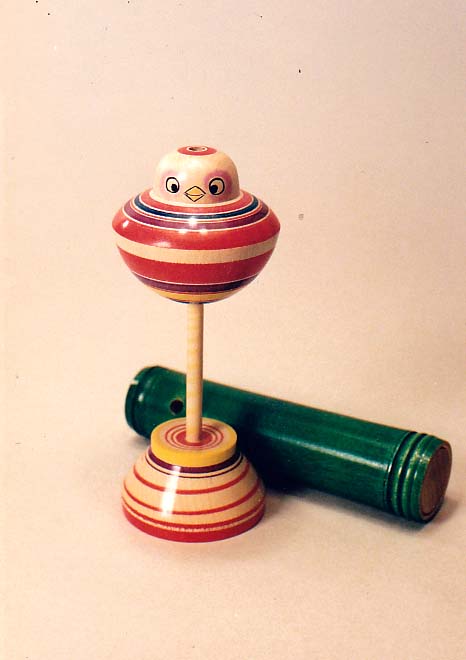
These tops depict candles with patterns of autumn plants (pampas grass and bush clover) on the sides. The flames on top are removed from the base and become tops.

***

***

Hiroi Michiaki: And these are candles.

Mrs. Hiroi: Candles, regular ones. For everyday use.

Hiroi: And it’s got spring and autumn, I think. This is… This has pampas grass on it, and this has bush clover, so they’re both autumn.

Mrs. Hiroi: Right.

Hiroi: This is the candle, this is the flame of the candle. If you use the string and wrap it around and give it a pop, it–

Mrs. Hiroi: It leaps out.

Hiroi: This comes out, and it spins like this. Mm. That’s all.


蝋燭独楽

Click to enlarge.
Click to enlarge.

タイトル:

蝋燭独楽 (rōsoku goma)
candle tops

=====================

秋の植物(ススキとハギ)が描かれた蝋燭の形をした独楽である。蝋燭の上にある炎の部分は取り外しが可能でそれぞれが独楽になる。

***

***

廣井道顕: で、これはあの蝋燭。

廣井夫人:蝋燭だね、普通の。使う蝋燭。

廣井:で、春と秋かな。これがこれススキに、これハギの絵ある、だから両方とも秋だな。んだからね。

夫人:そう。

廣井:これが蝋燭でこれは炎ね、蝋燭の。でこれ、糸かけて巻くと、ポンってやると、これが-

夫人:飛ぶの。

廣井:こう出てきて、こう回るのね。うん。これだけが。

味噌すり小僧 (miso-grinding young priest)

Click to enlarge.
Click to enlarge.

Title:

味噌すり小僧 (misosuri kozō)
miso-grinding young priest

=====================

This top depicts a miso-grinding young priest (or perhaps an obake [monster/spirit]). Hiroi-sensei believes the tale originated from Gunma or Tochigi prefecture, where there was a one-eyed and one-legged priest who ground miso for use in miso soup. The story of this young man eventually became the basis for the tale of a one-eyed, one-legged obake. Here, the top is the one-eyed man, and the base is the grinding mortar. When the top is spun, it mimics the motion of a grinding pestle in a mortar.

***

***

Hiroi Michiaki: Ahh, ahh. This.

Mrs. Hiroi: Miso grinder.

Hiroi: The miso-grinding Buddhist priest…. young priest. From long ago, there was someone called the miso-grinding priest. Umm, the miso…

Mrs. Hiroi: He ground it.

Hiroi: Umm in a mortar he ground it like this… and that was used for ingredients for miso soup. At that time he was called the miso-grinding priest… or was it young priest…

Mrs. Hiroi: The top is shaped like a priest.

Hiroi: This is, um… a one-eyed monster. There are also other items like that. Mm. At first I thought it was just something fanciful, but in reality there was a person with this sort of appearance. That was the model, and it became a one-eyed monster, and a sign board was put up. In Gunma or Tochigi, he was said to be a person working at a temple. And of course he had one leg, it was damaged in an accident or something and he lost it. He was working at a temple, though. That seems to have become the model. And this is the miso-grinding priest, and then I made it into a top with the same meaning. [Even] though [people] say ‘Ah!’ they don’t really get it. (laughs) How should I put it…

Mrs. Hiroi: It spins just like it’s grinding miso. Here, inside.


味噌すり小僧

Click to enlarge.
Click to enlarge.

タイトル:

味噌すり小僧 (misosuri kozō)
miso-grinding young priest

=====================

味噌すり小僧(もしくはお化け)がテーマの独楽である。廣井先生によると群馬県または栃木県発祥の話で、味噌汁に使う味噌をすっていた片目、片脚の小坊主がいたのだという。この小坊主の話が後々一つ目、一本足のお化けの素になった。この独楽は一つ目小僧で、下の部分はすり鉢になっている。独楽が回ると、すり鉢ですり潰すような動きをする。

***

***

廣井道顕: あぁ、あぁ。これは、ね。

廣井夫人:味噌すり。

廣井:味噌すり坊…小僧って。昔からあのう、味噌すり坊主という、いたんだよね。あのう、味噌を…

夫人:するやつ。

廣井:あのう、すり鉢でこう、すって…で、それを味噌汁だの、料理に使ってたんですけど。その時の味噌すり坊…小僧か…

夫人:坊主の格好を使った。

廣井:これはねあのう… 一つ目小僧っていう、また別に品物あるんですけど。うん、最初架空のものかなと思ってたって、実在の人、こういう恰好した人がいて、それがモデルで、一つ目小僧ができたんだって。で、あとから判ったんですけど。群馬だか、栃木にね、お寺で働いてた人なんだって。であのう、看板が出てるのね。一つ目小僧の、一本足で。であの片足、何か事故か何かで失くして、んで、やっぱり目が片っぽ、何か事故か何かにやられたんだね、目、片っぽ目が潰れていて。でお寺で仕事している人が。それがモデルみたいなのね。でこれは味噌すり坊主っていう、今で言えばゴマをするのと同じ意味なのな。あっ、と言っても分らないね。(laughs)要するに、何と説明したらいいんだ…

夫人:ちょうど味噌すってるように回るんだ。これがね、中で。


舌切り雀のおばあさん (the old woman who cut the sparrow’s tongue)

Title:

舌切り崔のおばあさん (shita kiri suzume no obaasan)
“the old woman who cut the sparrow’s tongue“

=====================

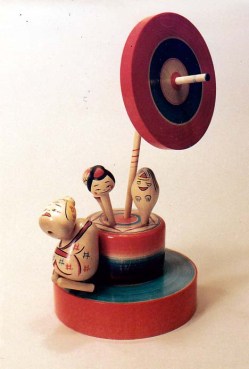
This top depicts the legend of “the old woman who cut the sparrow’s tongue” or “Tongue-cut Sparrow.” Although Hiroi-sensei’s description focuses on the old woman, the typical version of the tale includes both the woman and her husband. The old man, a woodcutter, was a kind and honest person, whereas his wife was arrogant and greedy. One day, the old man found an injured sparrow in the mountains while he worked, and brought it home to care for it. His wife was angry he would waste food on the bird. He continued to care for the sparrow. One day, the old man left it in the care of his wife while he went away for work. Without feeding it, she left the house to go fishing, and when she returned, found that it had eaten all of their starch while she was gone. Furious, she cut the bird’s tongue and sent it back into the wild.

When the old man returned to find the sparrow was gone, he went into the mountains, and with the help of other sparrows, found his friend. All of the sparrows celebrated by singing and dancing for him and brought him food. When he left, they offered him a large basket or a small basket to take with him, and the old man, being kind and practical, took the small basket that would be easy to carry. When he got home, he opened the basket to find it was full of a great amount of treasure. Seeing this treasure, the greedy old woman went back to the mountain to find the sparrow’s home, and demanded the large basket. She was instructed not to open it before she got home, but was too tempted by the treasure. When she opened it on the road, poisonous snakes and monsters popped out, and she was so startled she fell down and tumbled all the way down the mountain.

***

***

Hiroi Michiaki: This here, of course this is the old story of the sparrow with the cut tongue… This obake is… Ah. He’s hidden in here.

Mrs. Hiroi: Yeah.

Hiroi: I think there are three. Umm, the sparrow with the cut tongue is…

Mrs. Hiroi: There’s the old lady.

Hiroi: An old lady, um. She took some starch… In the past, you took things like cloth and put starch on it and stretched it out so that it didn’t get wrinkled. Because in the past there weren’t irons, you know. And because the sparrow ate all the starch on the stretched out wrinkled parts, this old woman cut out his tongue [as punishment], the sparrow’s tongue. Despite this, the sparrows invited the old woman to their home. And the woman who cut the sparrow’s tongue, umm, she neglected it, [but] it was in her debt, so when she went home, the [sparrows] said they’d give her a gift, and asked, “Which do you want, a large wicker basket or a small wicker basket?” and she was greedy, so she took the big one. And when she put the basket on her back and went [home], on the road obake (spirits/monsters) came out of it. The old woman was scared out of her wits and very disoriented. If you spin this, it rattles like this, and the obake spin around like this. And the old lady is terrified and looks like this. This is the tale of the sparrow with the cut tongue.

舌切り雀のおばあさん

タイトル:

舌切り崔のおばあさん (shita kiri suzume no obaasan)
“the old woman who cut the sparrow’s tongue“

=====================

『舌切り雀のおばあさん』または『舌切り雀』のお話が題材の独楽である。廣井先生の説明では、おばあさんに関することが主であったが、典型的なストーリーでは、おばあさんとその夫の両方が登場する。木こりのおじいさんは、優しく正直な人柄であるのに対して、妻のおばあさんは横暴で欲深い。ある日、おじいさんが山で仕事をしている際に傷ついた雀を見つけ、手当てをしてやるために家へと連れて帰る。おばあさんは雀のために食べ物を無駄にすると腹を立てた。それでもおじいさんは雀を介抱してやった。ある時、おじいさんは仕事のため、雀をおばあさんに預けて出かけた。エサをやらずに魚釣りに出かけた おばあさんが家に戻ると、雀が糊をすべて食べてしまっていた。怒った おばあさんは雀の舌を切り家から追い出した。

仕事から戻り雀がいなくなっていることを知ると、おじいさんは山へ入って行った、そして他の雀たちの助けを借り、可愛がっていた雀を探し出す。雀たちはご馳走をふるまい、歌や踊りでお じいさんを歓迎した。おじいさんが帰る際に、お土産に大きなつづらか小さなつづら、どちらか選んで持って行くように雀たちに言われた。優しい おじいさんは運び易さも考えて、小さなつづらを持って帰ることにした。家に着いて、つづらを開けてみると中にはたくさんの宝物が詰まっていた。それを見た欲深いおばあさんは山に戻り、雀のお宿を探し出すと、大きなつづらをよこすよう言った。家に着く前につづらを開けてはいけないと言われていたが、宝が見たくて仕方がなかった。道中でつづらを開けてしまうと、中から飛び出してきたのは毒蛇やお化けだったので、おばあさんはビックリしてひっくり返り、山から転げ落ちてしまった。

***

***

廣井道顕: これがねやっぱり昔話の舌切り雀の…あれこのお化け、あぁ、こっちに隠れてっか。

廣井夫人: うん。

廣井:三つあるはずなんだよな。あのう、舌切り雀が…

夫人:おばあさん。

廣井:おばあさんが、あのう、糊を、昔は、反物なんかを糊をつけてこうピンと張って、こうなんていうの、しわにならないように。昔アイロンつうのないからね。それでこう、しわ伸ばしてたところに、その糊を雀が食べたために、あの、このおばあさんが舌を切ってしまったのね、雀の。で、ところがその…雀たちがこの、逆におばあさんを雀のお宿へ招待するわけ。ほんで、あのう雀の舌を切れたのは、あのう、ほうっておいて、色々お世話になりましたから、帰りにお土産をあげますって言って、大きな葛篭(つづら)と小さな葛篭、どっちがいいがいいですかって、言ったら、その、欲張りだから、大きいの、もらって、それで、しょって行ったら途中でこのお化けが出てきて。で、おばあさんが腰をぬかして、大慌た、慌てして。こう回すと、これがこうガタガタガタガタってなってね、お化けがこう、こういう風に回るんだよね。で、おばあさんが腰ぬかしてこんなになってるように見えるのね。で、昔話の舌切り雀で。


竹にすずめ (sparrow in bamboo)

Click to enlarge.
Click to enlarge.

Title:

竹にすずめ (take ni suzume)
“sparrow in bamboo”

=====================

This top depicts a sparrow and bamboo stalk. According to Hiroi-sensei, sparrows are said to make their homes in bamboo groves.

***

***

Hiroi Michiaki: This is… ah. This is also a sparrow in the bamboo. This is the sparrow and this is the bamboo. When you wrap the string around this part it spins about.

竹にすずめ

Click to enlarge.
Click to enlarge.

タイトル:

竹にすずめ (take ni suzume)
“sparrow in bamboo”

=====================

竹に雀を表現した独楽である。廣井先生のお話では、雀はよく竹林に巣を作ると言われている。

***


***

廣井道顕: これが…あぁ。これも竹に雀だ。これが雀でこれ竹ね。で、これ糸巻いて回すとフラフラ回る。


つるかめと女男茶わん(crane and turtle his and hers teacups)

Click to enlarge.
Click to enlarge.

Title:

つるかめと女男茶わん(tsurukame to meoto chawan)
“crane and turtle his and hers teacups”

=====================

This set of tops is “his and hers” teacups, meant as a good omen for spousal relations. The design features flowers and butterflies on the outside and images of cranes and turtles on the inside, both symbols of longevity. Small tops are hidden inside the cups. In one cup, there is a pair of tops representing okame and hyottoko, male and female characters of Japanese lore. Their plain features are meant to reflect good luck for everyday people in spousal relations.

**okame and hyottoko are popular themes for masks in Japan, often seen in traditional kyogen or dengaku performances and festivals. Okame is an plain-faced woman, and hyottoko an ordinary man, often featured with his lips puckered to the side and eyes different sizes.

***

***

Hiroi Michiaki: This one is…

Mrs. Hiroi: There are tops hidden in the teacups.

Hiroi: This, um…

Mrs. Hiroi: It’s a good relationship.

Hiroi: They’re “his and hers” teacups, and cranes and turtles, is it? The lid here becomes a top, and here the cranes and turtles, which are good omens in Japan for, err, what is it- symbols of longevity? A crane is a thousand years, and a turtle ten thousand. They’re an auspicious combination for longevity.  And here is… this is probably okame and hyottoko.** (see above)

Mrs. Hiroi: Yeah.

Hiroi: Yeah, it’s okame and hyottoko.

Mrs. Hiroi: Hyottoko goes in one of the cups.

Hiroi: Mmm. It’s here [in the picture] but you can’t see the face, so. It’s okame and hyottoko. This is for good spousal relations so it’s okame and hyottoko. They’re not necessarily very handsome-looking.